The Ford Motor Company didn’t just put America on wheels; it built the heavy-duty workhorses that literally built the modern world. Since its founding in 1902, the Blue Oval has rolled out countless innovations, but for automotive enthusiasts and fleet operators alike, the brand’s true legacy isn’t found in a sleek silhouette or a fancy infotainment screen—it lies deep under the hood.
While iconic nameplates like the Mustang, F-150, and Bronco get the glory in the brochures, their legendary status was forged by the cast-iron blocks and rumbling V8s that powered them through decades of abuse.
Not every engine to come out of Dearborn has been a home run—anyone who lived through the spark-plug-launching era of the early Triton V8s can attest to that. But when Ford gets the recipe right, they produce powerplants that border on indestructible. To identify the most reliable Ford engines ever made, we have to look past the marketing hype and focus on decades of real-world service.
These are the engines that have survived the relentless idling of police pursuit duty, powered UPS fleets through a thousand winters, and hauled heavy trailers long past the 300,000-mile mark. In an era where 2026 search trends show buyers are increasingly wary of complex turbochargers, these “unkillable” engines represent a golden era of mechanical simplicity.
1. The 300 Cubic Inch (4.9-liter) Inline-Six: The Immortal Six
Production Years: 1965–1996 | Power Outputs: 101–170 hp
If you ask any seasoned mechanic which engine belongs on the Mount Rushmore of durability, the Ford 300 Inline-Six won’t just be mentioned—it will likely dominate the conversation. Developed strictly for commercial and heavy-duty applications, this engine is a masterclass in the art of over-engineering.
What makes it one of the best Ford truck engines for longevity? It starts with a heavy cast-iron block equipped with seven main bearings. But the real secret is in the timing. While modern engines rely on rubber belts or metal chains that eventually stretch and snap, the 300 uses gear-driven camshafts. By eliminating the timing chain entirely, Ford removed the most common catastrophic failure point in the internal combustion engine. Because it was designed to deliver peak torque at a mere 1,600 rpm, the engine spends its entire life in a “relaxed” state, never needing to scream at high RPMs to get the job done.
More Read
“The 300 Inline-Six is the cockroach of the automotive world, and I mean that with the highest respect. You can overheat it, starve it of oil, and run it a decade past its service interval, and it will still fire up to get you home.
While early carbureted versions were simple to work on but could be finicky in sub-zero temperatures, the 1987 switch to electronic fuel injection (EFI) perfected the formula. Aside from a tendency for the exhaust manifolds to crack after thirty years of heat cycles, these motors are essentially bulletproof. They didn’t just power F-150s; they were the heartbeat of airport tugs, tractors, and commercial woodchippers where downtime simply wasn’t an option.
2. The 7.3-liter Power Stroke Diesel V8: The Million-Mile Hauler
Production Years: 1994–2003 | Power Outputs: 210–275 hp
Manufactured for Ford by Navistar International, the original 7.3-liter Power Stroke is widely considered the gold standard for heavy-duty pickup Ford engine longevity. This was a “pre-emissions” engine, arriving before the introduction of complex, heat-trapping Diesel Particulate Filters (DPF) and Selective Catalytic Reduction (SCR) systems that require Diesel Exhaust Fluid (DEF).
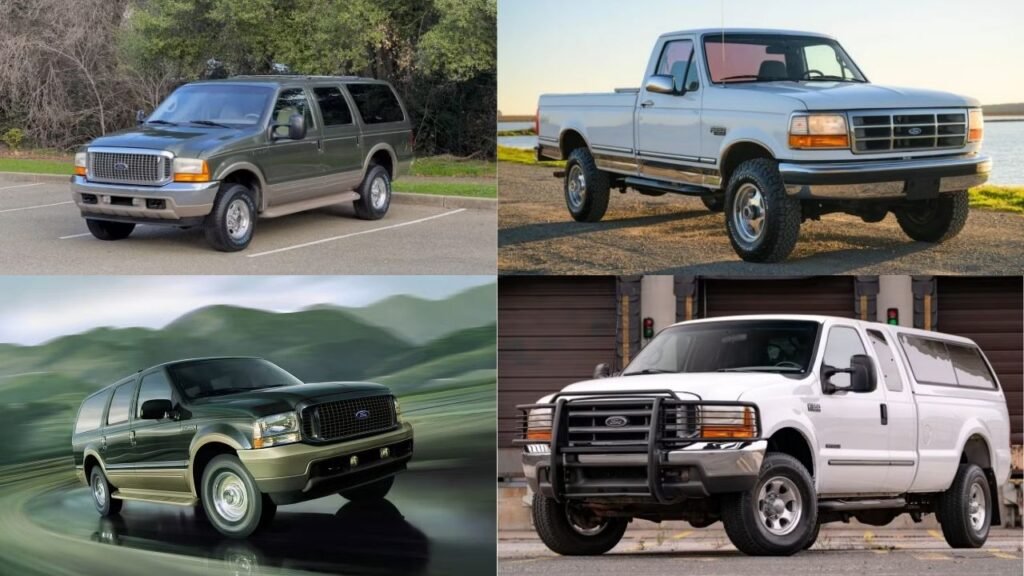
The 7.3-liter succeeded because it ran cool and unrestricted. Its Hydraulic Electronic Unit Injection (HEUI) system used high-pressure engine oil to fire the fuel injectors—a robust system that thrived in high-mileage environments. While early models were known for a finicky Camshaft Position Sensor (CPS), which was a ten-minute fix on the side of the road, the rotating assembly itself was built to last forever. Making upwards of 500 lb-ft of torque in its final iterations, this engine turned the Super Duty into a legend.
According to vehicle registration data, nearly 25% of all 7.3L Power Stroke-equipped trucks sold between 1999 and 2003 are still on the road today, many with over 400,000 miles on the original block.
3. The 4.6-liter Modular V8: The Fleet King
Production Years: 1991–2014 | Power Outputs: 190–302 hp
If you have ever hailed a taxi in Manhattan or sat in the back of a police cruiser, you have likely been propelled by the 4.6-liter Modular V8. Built for environments where “high idle” and “high abuse” are standard operating procedures, this overhead-cam V8 earned its stripes through sheer persistence.
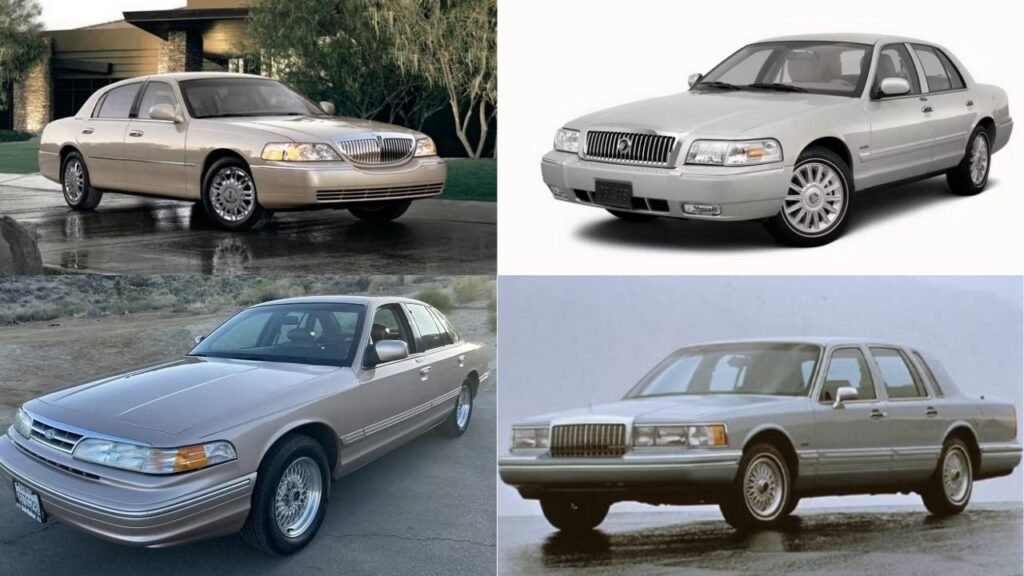
The early 1990s versions had their teething issues—specifically plastic intake manifolds that didn’t like heat and cylinder heads with shallow spark plug threads that could “launch” a plug under pressure. However, once Ford revised these designs in the late ’90s, the 2-valve, naturally aspirated 4.6-liter became an absolute tank. Beyond the Crown Victoria, it provided incredibly reliable service in the Mustang GT and millions of F-150s. Its success paved the way for Ford’s modern modular family, proving that an overhead-cam design could be just as durable as the old-school pushrod engines.
4. The 5.0 (302) and 5.8-liter (351) Windsor V8: Simple, Solid, and Stalwart
Production Years: 1962–2001 (302), 1969–1997 (351) | Power Outputs: 130–250 hp
The Windsor small-block family earned its reputation through pure, unadulterated simplicity. Utilizing a traditional overhead-valve (OHV) pushrod design, these cast-iron blocks featured thick cylinder walls that welcomed thousands of heat cycles without the warping or cracking issues that plague modern aluminum-block engines.
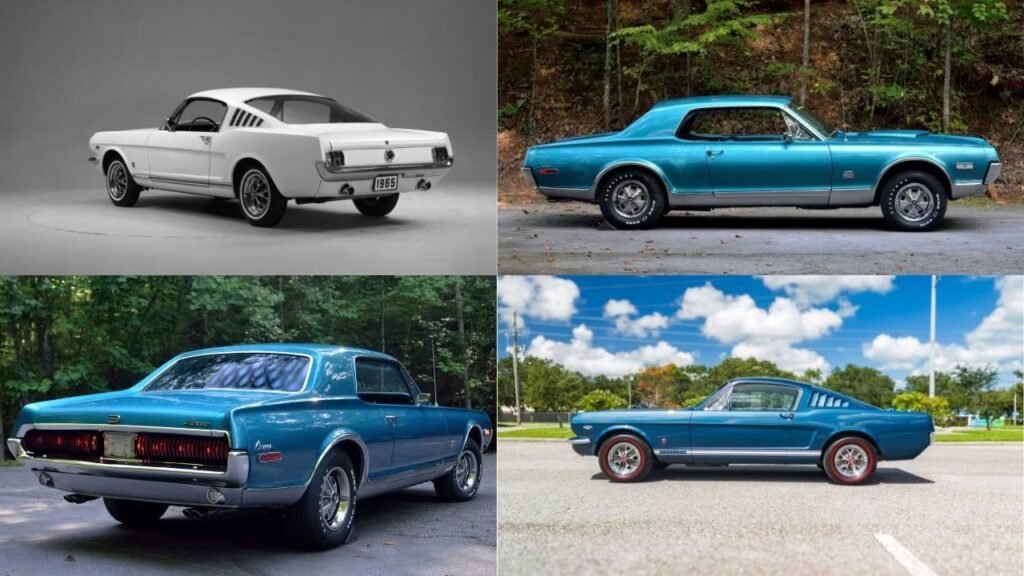
Because of its nearly 40-year production run, the Windsor V8 powered everything from the 1960s Fairlane to the Fox Body Mustang and the O.J. Simpson-era Bronco. While it evolved to feature roller cams and EFI, the fundamental architecture never changed. Today, parts availability for the Windsor is virtually infinite. Whether you are at a local NAPA or an online warehouse, you can find everything needed to keep a 302 running for pennies on the dollar, making it the premier choice for DIY project cars.
5. The 6.2-liter Boss V8: The “No Regrets” Replacement
Production Years: 2010–2022 (F-Series), 2017–present (E-Series) | Power Outputs: 385–500 hp
In the late 2000s, Ford was reeling from the reliability woes of the 5.4-liter 3-valve Triton V8, which was plagued by cam phaser failures and spark plug issues. To win back truck buyers, Ford went “back to basics” with the 6.2-liter Boss V8.
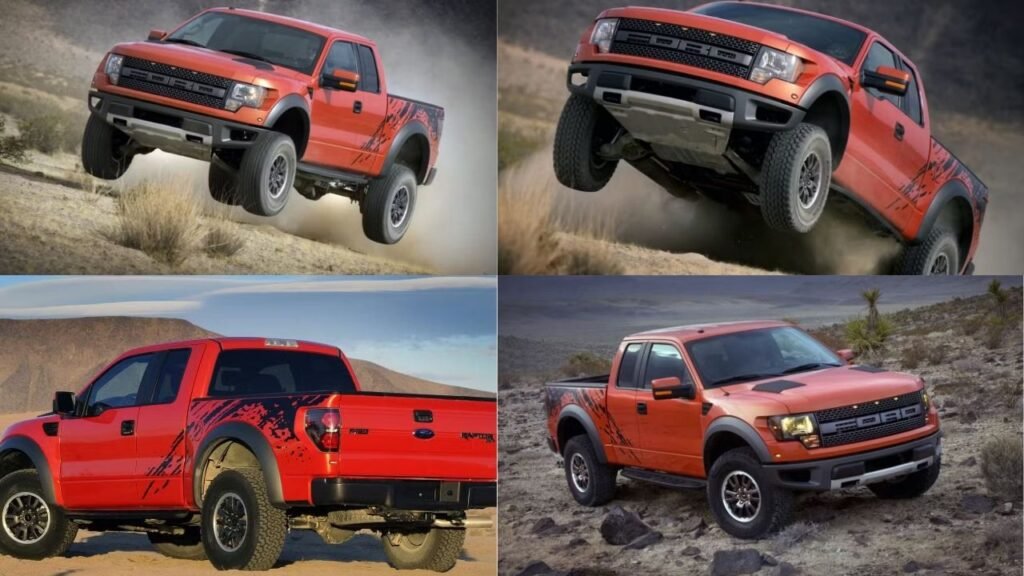
Debuting in the first-generation F-150 SVT Raptor and the Super Duty lineup, the 6.2L utilized a simple single-overhead-cam (SOHC) valvetrain with two spark plugs per cylinder for more efficient combustion. Crucially, Ford engineers ditched the complex variable valve timing systems that had failed them previously. Society of Automotive Engineers (SAE) technical review of Ford 6.2L SOHC architecture. Aside from the occasional broken valve spring on trucks that spend their lives towing maximum payloads, the Boss is universally praised as one of the most reliable gas engines of the modern era.
6. The 6.8-liter Triton V10: The Mountain Mover
Production Years: 1997–2021 | Power Outputs: 275–362 hp
For buyers who needed diesel-level towing capacity without the expensive oil changes and diesel fuel surcharges, the 6.8-liter Triton V10 was the answer. Essentially a 5.4-liter V8 with two extra cylinders grafted onto the block, this massive engine was designed specifically to move heavy loads at a steady pace.
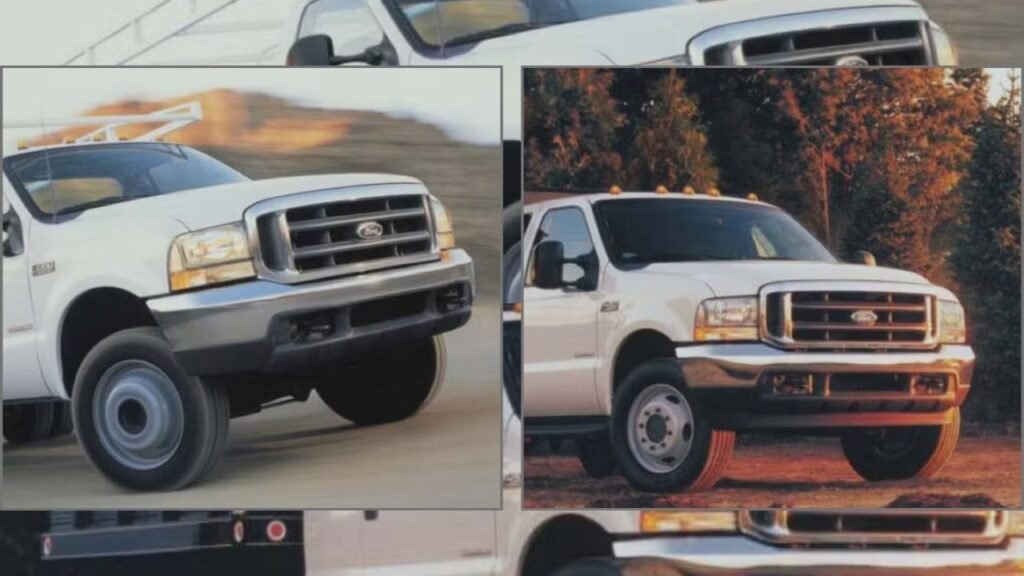
Found primarily in Super Duty trucks, U-Haul box trucks, and Class A motorhomes, the V10 succeeded because it was profoundly under-stressed. Most of these engines spend their lives at low RPMs, gently chugging along. While the early 2-valve models shared the spark plug issues of the smaller V8s, the later 3-valve versions became staples of the commercial industry. It is not uncommon to find V10-powered motorhomes with 200,000 miles that still run as smoothly as the day they left the factory.
7. The 5.0-liter Coyote V8: Modern Complexity Done Right
Production Years: 2011–present | Power Outputs: 360–500 hp
The 5.0-liter Coyote is the youngest engine on this list, and its inclusion proves that high-tech complexity doesn’t have to mean a short lifespan. Despite using Dual Overhead Cams (DOHC) and Twin Independent Variable Camshaft Timing (Ti-VCT) to squeeze nearly 100 horsepower per liter, the Coyote has proven remarkably resilient.
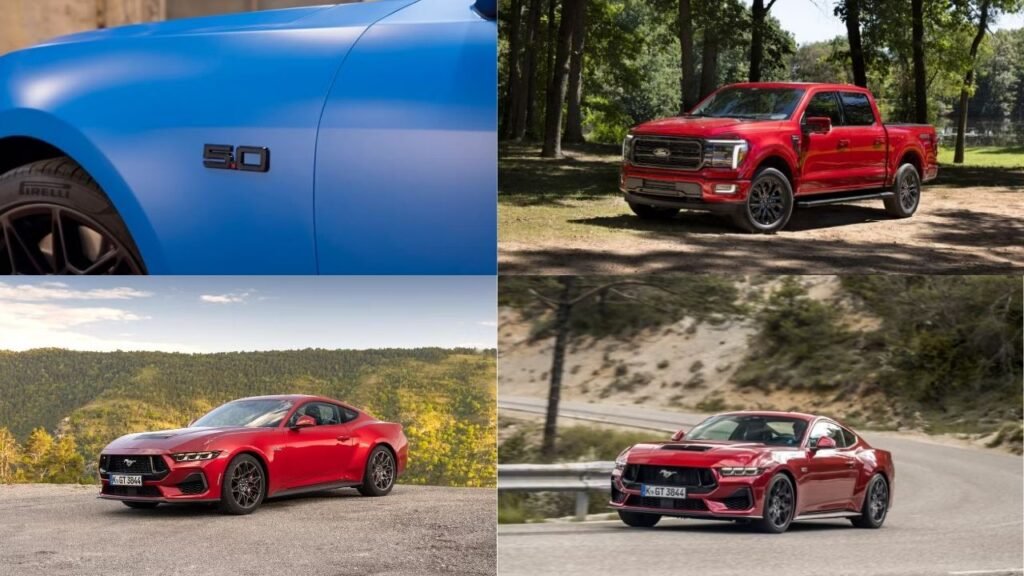
Ford has continuously refined the platform over four generations. In 2018, they made a major leap in Ford engine longevity by adding port fuel injection alongside direct injection. This “dual-injection” system continuously washes the intake valves with gasoline, completely solving the carbon-buildup issues that have plagued other modern direct-injected engines. Whether it’s hauling lumber in an F-150 or screaming toward an 8,000-rpm redline in a Mustang Dark Horse, the Coyote is proof that you can have your performance cake and eat it, too.
Choosing Your Iron: The Bottom Line on Reliability
A vehicle is only as good as the heart beating under its hood. While modern 2026 automotive engineering continues to push toward smaller, heavily turbocharged four-cylinder engines and full electrification, the legacy of Ford’s naturally aspirated V8s and torquey inline-sixes remains the benchmark for those who value longevity above all else.
If you are hunting for a used truck or a long-term project car, checking the VIN to ensure it houses one of these seven engines is the smartest investment you can make. From the “cockroach” 300 I-6 to the high-revving Coyote, these powerplants weren’t just built to run—they were built to last.
Reliability isn’t just about how an engine performs when it’s new. It’s about how it performs when it’s fifteen years old, low on coolant, and hauling a trailer uphill in July. These seven engines have proven they can take that punch and stay in the fight.
In the end, Ford’s true greatness isn’t found in the gadgets, but in the iron. If you choose one of these seven legends, you aren’t just buying a motor; you’re buying peace of mind for the next quarter-million miles.