It’s the kind of news that makes any off-roading enthusiast cringe: Ford is calling back its darling of the trails, the Bronco, for yet another recall. But this time, the blame doesn’t lie with a faulty assembly line robot or a cut-rate supplier. Instead, the culprit is the “human element”—specifically, the aftereffects of previous service repairs that went sideways.
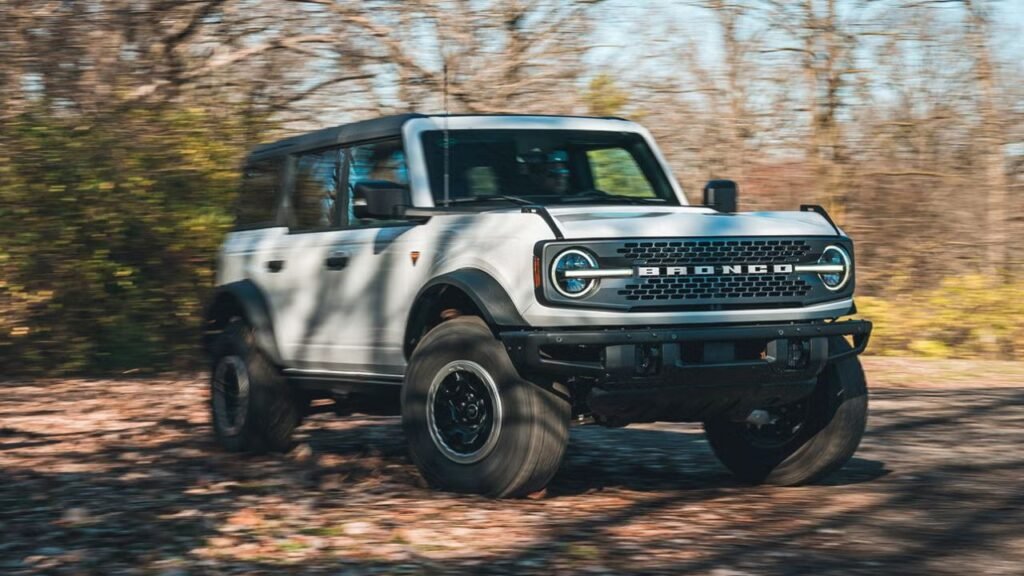
According to documents recently submitted to the National Highway Traffic Safety Administration (NHTSA), exactly 4,922 Ford Bronco SUVs from the 2021 to 2025 model years are being recalled because of a botched drivetrain repair that could leave your vehicle rolling down a hill—even while it’s in “Park”.
The irony isn’t lost on the automotive community. This is effectively a recall to fix a fix that wasn’t fixed correctly. For owners of the popular 4×4, the stakes are high. A misaligned joint in the drivetrain can lead to a sudden loss of motive power while driving or, more alarmingly, a complete failure of the vehicle’s parking mechanism. If you’re one of the nearly 5,000 owners affected, the manual parking brake is about to become your best friend.
Inside the Mechanical Breakdown: Splines and Stripped Gears
To understand why this is happening, you have to look past the Bronco’s rugged exterior and into the “spine” of its four-wheel-drive system. The failure point centers on the critical junction where the transmission meets the transfer case. In the affected vehicles, these two massive components were removed for a previous repair and then reinstalled incorrectly.
When these units are bolted back together, the output-shaft splines of the transmission must align perfectly with the input-shaft splines of the transfer case. If they are even slightly askew, they don’t mesh; they bind. This creates a “shearing” effect, where the metal teeth of the splines essentially grind themselves into dust over time. Once those splines strip out completely, the mechanical link between the engine and the wheels is severed.
When a transmission and transfer case are bolted together out of alignment, the metal-on-metal shear force on those splines is immense. It’s not a matter of if they will fail, but when. If those splines strip, the mechanical link is severed. Because the park pawl is located inside the transmission, it can no longer hold the vehicle in place through a disconnected transfer case, making the manual parking brake your only fail-safe.
The Roll-Away Threat: Why ‘Park’ Isn’t Enough
For most drivers, putting a car in “Park” feels like dropping an anchor. That feeling comes from a small metal component inside the transmission called a park pawl. This pin locks the transmission’s output shaft, preventing it from rotating. However, in a 4×4 like the Bronco, the transmission sends that “locked” energy through the transfer case and out to the wheels.
Here is the rub: If the splines between the transmission and the transfer case strip, the “anchor” is effectively dropped in the middle of a cut rope. The transmission might be locked tight, but it’s no longer physically connected to the wheels that are actually touching the ground. If you’re parked on an incline—be it a steep driveway or a mountain trail—the vehicle will obey the laws of gravity and roll away, regardless of what the gear selector says.
More Read
This isn’t a theoretical risk. Ford’s investigation into the matter began last November after field data suggested a pattern of drivetrain disconnects following service work. To date, the automaker is aware of at least 25 warranty claims related to this specific failure mode globally. Thankfully, as of April 2026, there have been no reported accidents or injuries tied to this defect, but the NHTSA isn’t taking any chances.
Spotting the Warning Signs: Listen to the Chassis
Catastrophic failure in a 4×4 drivetrain rarely happens without a “prologue.” Ford and independent mechanics agree that owners will likely receive sensory warnings before the splines give up the ghost.
If you are driving a 2021–2025 Bronco that has had major transmission or transfer case work in the past, you should keep your ears open for:
- Metallic Grinding: A persistent “sand-in-the-gears” sound coming from the center of the vehicle.
- Clunking on Throttle: A distinct thud when you shift from Reverse to Drive or when you tip into the gas pedal after coasting.
- Vibration under Load: Unusual shuddering through the floorboards during acceleration.
“These noises are the sound of metal being slowly pulverized,” warns Rodriguez. If you hear these symptoms, the time for “wait and see” is over. You are likely inches away from a total loss of drive power.
Ford’s Ongoing Quality Struggle: 33 Recalls and Counting
For the Ford faithful, this news feels like a bad case of déjà vu. This Bronco action marks Ford’s 33rd recall of 2026—and we are only five months into the year. This follows a disastrous 2025 for the Blue Oval, a year in which the company led the industry with a staggering 152 recall campaigns in the U.S. alone.
Ford CEO Jim Farley has been vocal about the company’s “war on quality,” noting that warranty costs are draining roughly $5 billion from the bottom line annually. While Ford has implemented new AI-driven defect detection systems in its plants to catch factory errors, this latest Bronco issue highlights a different vulnerability: the dealer service network. By updating its workshop manuals on February 26, 2026, Ford is essentially admitting that its previous service instructions weren’t clear enough to prevent technicians from making this costly alignment mistake.
The Fixing Process: What to Expect at the Dealer
If your Bronco falls under the 4,922-unit umbrella, Ford is offering a comprehensive—and free—remedy. The service procedure involves a specialized inspection of the transmission-to-transfer case joint.
Technicians will use precision alignment tools to ensure the components are seated to factory specifications. If the inspection reveals that the splines have already begun to “mar” or show signs of excessive wear, Ford has authorized the complete replacement of both the transmission and the transfer case.
A full transmission and transfer case replacement on a modern Bronco can cost upwards of $7,500 out-of-pocket, making this warranty-covered repair a critical financial save for owners.
Proactive Steps: Don’t Wait for the Mail
While Ford began notifying dealers in late April 2026, official owner notification letters aren’t expected to hit mailboxes in full until September 30, 2026. Waiting four months to address a roll-away risk is a gamble most enthusiasts aren’t willing to take.
Fortunately, you can check your status right now. Here is your action plan:
- Check Your VIN: Go to the NHTSA Recall Website or Ford’s owner portal and enter your 17-digit Vehicle Identification Number.
- Call Customer Service: You can reach Ford’s recall hotline directly at 1-866-436-7332.
- The “Safety First” Habit: Until your vehicle is inspected, always engage the electronic parking brake before exiting the vehicle. Unlike the park pawl, the parking brake acts directly on the rear wheels, bypassing the drivetrain splines entirely.
[EXPERT QUOTE: “The electronic parking brake on the Bronco is a robust system. In this specific recall scenario, it is your only true line of defense against a roll-away. Even if you think your car is fine, making that ‘click’ a habit could save your garage door—or a life.” — Jennifer Holloway, Lead Safety Advocate at the Vehicle Integrity Institute]
Final Perspective: The Cost of Complexity
The 2021–2025 Ford Bronco is a marvel of modern off-road engineering, but this recall serves as a sobering reminder that complexity comes with a price. When we build vehicles capable of crawling over boulders while providing a quiet highway ride, we rely on hundreds of tightly clearanced interfaces. When those interfaces are disturbed by human hands during a repair, the room for error is microscopic.
For Ford, the 2026 recall volume suggests that the climb toward industry-leading quality is still a steep one. For the Bronco owner, it’s a reminder to stay vigilant, listen to your vehicle, and never underestimate the power of a simple parking brake. Ford has the parts and the plan to fix this; now, it’s up to the owners to get their trucks into the shop before the gravity of the situation takes hold.