If there’s one thing automotive enthusiasts have been screaming for over the last five years, it’s a return to form. We want SUVs that actually look like SUVs. We want boxy proportions, legitimate ground clearance, and a sense that the vehicle in our driveway could, at a moment’s notice, tackle a backcountry trail without snapping a plastic fascia.
Last week, Nissan dropped a shadowy, mysterious teaser that made the off-road community sit up and pay attention. Now, with the doors wide open at the Beijing Auto Show, the Japanese automaker has officially delivered the goods: meet the Nissan Terrano PHEV concept.
It’s bold, it’s blocky, and it brings a legendary nameplate out of the history books and into the electrified era. Unveiled alongside a sleeker, road-focused sibling called the Urban SUV PHEV, the Terrano concept represents a massive shift in Nissan’s design philosophy. More importantly, it signals the brand’s commitment to putting production-ready, plug-in hybrid off-road SUVs on the market within the next calendar year. Nissan’s official Beijing Auto Show press release.
But here’s the million-dollar question for those of us sitting outside of China: Is this rugged new hybrid purely a regional play, or are we looking at the blueprints for the next-generation global Nissan Pathfinder?
Let’s dive into what makes the Terrano PHEV so compelling, why the plug-in hybrid powertrain is the ultimate sweet spot for overlanding, and what this aggressive new design language means for the future of Nissan’s body-on-frame lineup.
The Return of a Legend: Why “Terrano” Matters
To truly appreciate what Nissan is doing here, we have to take a quick trip down memory lane. For younger buyers, the name “Terrano” might sound like a fresh, outdoorsy marketing term. But for seasoned gearheads and off-road veterans, it carries some serious historical weight.
Throughout the late 1980s and into the 1990s, the Terrano badge was slapped onto the tailgate of one of the most beloved 4x4s of the era. If you lived in the United States, you knew it as the original WD21-generation Nissan Pathfinder. It was the quintessential two-door (and later four-door) adventure rig, featuring the iconic triangular rear quarter windows, a robust four-wheel-drive system, and a rugged frame shared with the Nissan Hardbody pickup.
More Read

By reviving the Terrano nameplate today, Nissan is making a very deliberate statement. They aren’t just launching another generic crossover destined for the mall parking lot. They are directly referencing a heritage of durability, capability, and adventure.
“Automakers are finally realizing that nostalgia combined with modern electrified capability is a license to print money. Reviving a heritage nameplate like Terrano for a boxy PHEV tells enthusiasts that Nissan is serious about reclaiming its territory in the rugged SUV segment, a space currently dominated by the Bronco and Wrangler.” — Sarah Jenkins, Lead Automotive Analyst, Global Auto Insights
This heritage play is smart business. The market has loudly rejected the “jellybean” crossover styling that dominated the 2010s. Today, buyers are flocking to retro-inspired, blocky vehicles. year-over-year sales increase in the mid-size off-road SUV. The new Terrano leans heavily into this trend, promising a vehicle that looks as tough as its ancestors but packs a thoroughly modern punch under the hood.
A Masterclass in Purposeful Design
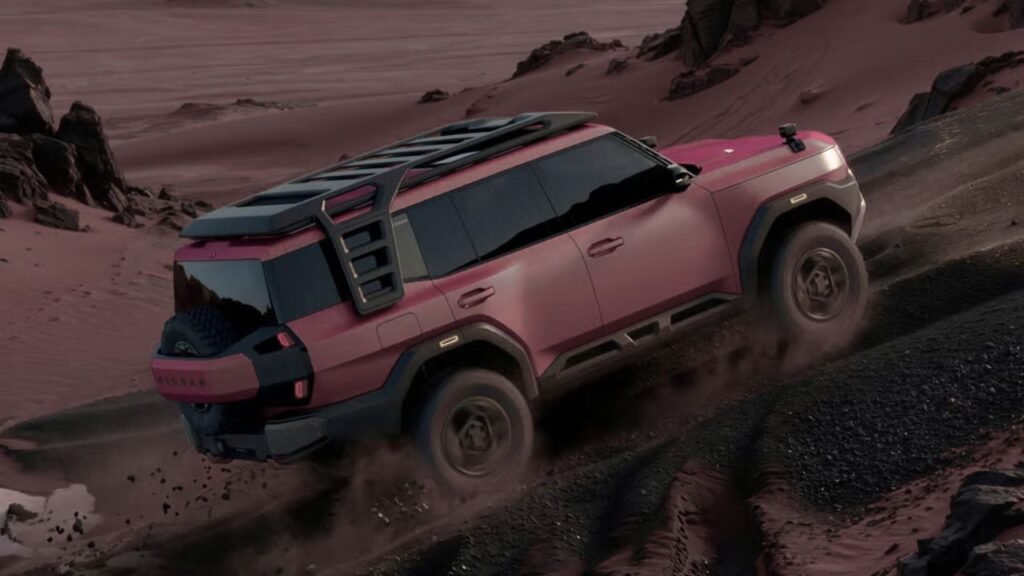
Take one look at the Terrano PHEV, and it’s abundantly clear that Nissan’s design team was given a long leash. This is a genuinely handsome, purposefully built machine that manages to look tough without crossing the line into cartoonish, overly aggressive territory.
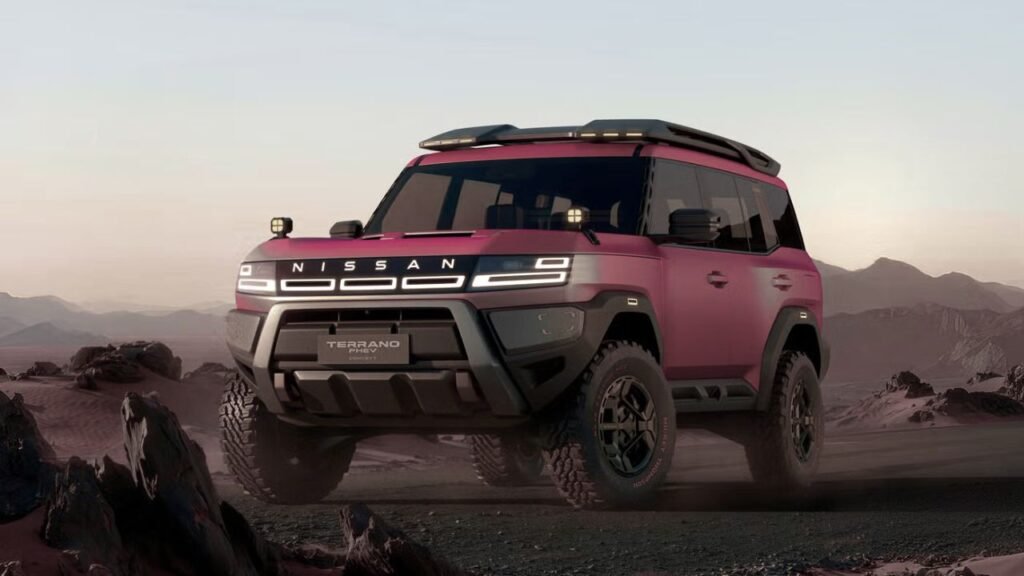
Let’s start with the proportions. The concept features an incredibly upright front end, a flat roofline, and remarkably short front and rear overhangs. In the off-road world, overhangs are the enemy; the shorter they are, the better your approach and departure angles will be when navigating steep inclines, deep ruts, or rocky trails.
The front fascia ditches the traditional corporate V-Motion grille in favor of something far more futuristic, yet utilitarian. It is characterized by an array of rectangular, pixel-like LED light blocks that give the truck a wide, planted stance. But it’s the overlanding accessories that really sell the vision.
Nissan has integrated auxiliary yellow marker and fog lights directly into the hood line, providing crucial visibility for dusty or foggy trail runs. Up top, a heavy-duty, futuristic roof rack dominates the profile, featuring its own integrated forward-facing LED light bar.
Moving down the side profile, prominent black cladding wraps around flared wheel arches, protecting the bodywork from trail pinstriping and rock chips. The hood features three distinct vents—presumably to help manage the thermal load of the internal combustion engine working in tandem with the hybrid system.
Around back, Nissan has kept the classic off-road vibe alive. A full-size spare tire sits proudly on the tailgate, housed behind a sleek, body-colored band featuring the new, minimalist Nissan badging. Beside it, a sturdy ladder provides easy access to the roof rack.
It looks like a proper, old-school off-roader, but one that just rolled out of a sci-fi film.
Under the Hood: Why PHEV is the King of the Trail
While Nissan has been relatively tight-lipped about the exact horsepower, torque, and battery capacity specs hiding underneath the Terrano’s chiseled sheet metal, we do know the most critical detail: it utilizes a plug-in hybrid (PHEV) powertrain.
For automotive enthusiasts, especially those who spend their weekends miles away from cell service, a PHEV setup is arguably the holy grail of current propulsion technology.
Fully electric vehicles (EVs) are incredible marvels of engineering, but range anxiety is a real, tangible fear when you are deep in the backcountry. There are no fast chargers in the middle of a national forest. Conversely, traditional internal combustion engines (ICE) lack the instantaneous, zero-RPM torque delivery that makes electric motors so phenomenal for low-speed rock crawling.
A plug-in hybrid off-road SUV bridges this gap perfectly.
With a PHEV system, you get the best of both worlds. The electric motors provide instant, easily modulated torque to all four wheels, allowing for incredibly precise throttle control when navigating technical obstacles. You can run silently through nature, enjoying the sounds of the trail without the drone of an exhaust note. But, crucially, when the battery depletes, the onboard gasoline engine kicks in. You can simply carry a few jerry cans of fuel to extend your range indefinitely, completely eliminating backcountry range anxiety.
Furthermore, the large battery pack inherent to a PHEV can serve as a massive mobile power station. Overlanders can use the vehicle to power camping equipment, electric coolers, lighting, and tools without needing to lug around a noisy, separate gas generator.
By committing to a PHEV platform for the Terrano, Nissan isn’t just adhering to tightening emissions regulations; they are actively building a better tool for the off-road enthusiast.
The Urban SUV PHEV: The Sleek City Counterpart
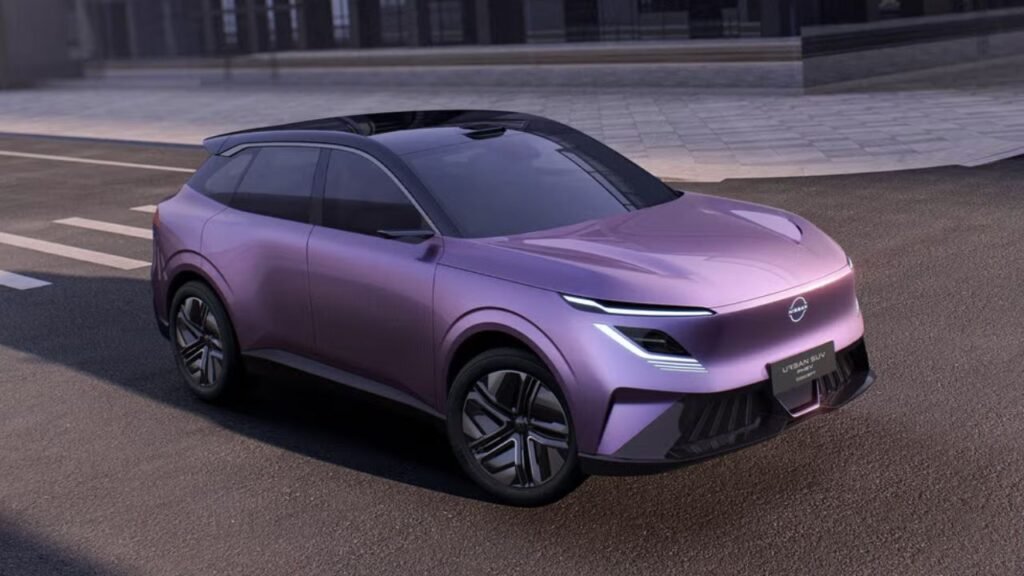
The Terrano wasn’t the only star of Nissan’s Beijing showcase. Sharing the stage was its stark opposite: the Urban SUV PHEV concept.
If the Terrano is a rugged hiking boot, the Urban SUV is a sleek, designer running shoe. Nissan states that this model is explicitly targeted at young, urban-dwelling Chinese car shoppers who prioritize aesthetics, technology, and on-road comfort over trail capability.
The design language here is smooth and aerodynamic. The bodywork flows seamlessly, completely omitting a traditional front grille in favor of a sleek, unbroken front fascia. The headlights are sharp and swept back, looking very much like an evolution of the front end currently seen on the Nissan NX8, a popular electric and PHEV crossover already sold in the Chinese market.
At the rear, the Urban SUV features a prominent, sporty spoiler and a full-width horizontal LED light bar that visually widens the car’s stance.
The existence of the Urban SUV alongside the Terrano highlights a brilliant dual-pronged strategy. By utilizing a shared electrified platform, Nissan can capture the adventurous, outdoorsy demographic with the Terrano, while simultaneously appealing to the tech-focused city driver with the Urban SUV. It’s an efficient, highly profitable way to maximize the return on their EV and PHEV research and development.
Global Implications: A Preview of the Next-Generation Pathfinder?
Now, we have to address the elephant in the room. Historically, automotive journalists and consumers in North America and Europe tend to gloss over vehicles designed specifically for the Chinese domestic market. The conventional wisdom is that these cars are hyper-localized and have little relevance to Western buyers.
However, the automotive landscape is shifting dramatically. China is no longer just a secondary market; it is a global incubator for electrified vehicle technology and design.
“What debuts in Beijing rarely stays in Beijing anymore. Global automakers are using the highly competitive Chinese EV market as a real-world testing ground. If a platform succeeds there, the architecture inevitably migrates to North America and Europe within a generation.” — David Chen, Director of Asian Market Forecasting, AutoTrends Research
This brings us to the tantalizing possibility that the Terrano PHEV is more than just a regional oddity. Could this concept be secretly telegraphing the future of Nissan’s global body-on-frame SUVs?
There is a very strong chance that the underlying architecture, the PHEV technology, and the rugged design language of the Terrano are intrinsically linked to the highly anticipated next-generation Nissan Pathfinder, or perhaps even a revived Xterra for the North American market.
Nissan has explicitly promised that production versions of both the Terrano and the Urban SUV will be on the streets in China within a year. They also announced plans to unleash three more new PHEV or electric models in that same timeframe. That is an incredibly aggressive product roadmap.
Listen closely to the words of Ivan Espinosa, Nissan’s President and CEO, during the reveal:
“Under our vision, China is not only a highly competitive domestic market but also a source of innovation, enabling us to create new value and experiences for customers in China and in the global markets.”
That phrase—global markets—is the smoking gun. Espinosa is telling us point-blank that the innovations pioneered on these concepts are destined for worldwide export.
The current Nissan Pathfinder is a highly competent family hauler, but it has softened considerably over the years, leaning closer to a minivan alternative than the rugged trail-runner it used to be. A next-generation Pathfinder that borrows heavily from the Terrano’s boxy, upright styling and adopts its highly capable PHEV powertrain would be an absolute game-changer. It would allow Nissan to go toe-to-toe with the Toyota 4Runner hybrid, the Jeep Grand Cherokee 4xe, and the Ford Bronco in a way they haven’t been able to in over a decade.
The Road Ahead
The debut of the Nissan Terrano PHEV concept is a massive win for automotive enthusiasts. It proves that the era of electrification doesn’t have to mean the death of the rugged, purposeful off-roader. In fact, if leveraged correctly, plug-in hybrid technology can actually elevate the overlanding experience.
Nissan has delivered a masterclass in heritage-inspired design that feels both nostalgic and fiercely modern. By pairing aggressive, boxy styling with the practical, instant-torque benefits of a PHEV system, they have created a formula that just begs to be driven off the showroom floor and straight into the dirt.
Whether the Terrano badge ever graces the shores of North America or Europe remains a closely guarded corporate secret. We’ll just have to wait and see what auto shows in Los Angeles, Detroit, or Geneva bring in the coming years.
But one thing is absolutely certain: if the Terrano PHEV is a preview of the next-generation Pathfinder or the future of Nissan’s global off-road strategy, the brand is heading exactly where enthusiasts want them to go—straight off the beaten path.