The sheer scale of the Beijing Auto Show 2026 is, frankly, difficult to wrap your head around. It’s an absolute sensory overload for automotive enthusiasts, a chaotic symphony of unveiling ceremonies, flashing cameras, and the quiet hum of next-generation powertrains.
While the mainstream automotive press spent the week obsessing over the latest practical family crossovers and hybrid daily drivers—like the charming return of the Smart #2 city car or Nissan’s rugged Terrano PHEV—the real story brewing on the show floor was far more electric. And a lot faster.
If you look past the volume sellers at the Beijing Auto Show, you’ll find a hidden world of radical designs, physics-defying electric supercars, and bold new concept cars that are quietly rewriting the rules of performance. The global automotive epicenter has shifted, and legacy automakers should be paying very close attention. Here is a deep dive into the absolute wildest, most high-octane reveals you probably missed from this year’s monumental exhibition.
BYD’s Premium Push: The Denza Z Hypercar
Let’s start with the undisputed heavyweight champion of the show floor. Chinese automotive juggernaut BYD didn’t just come to Beijing to sell sensible sedans; they came to flex some serious, uncompromising engineering muscle. Recent BYD global sales dominance and R&D investment statistics
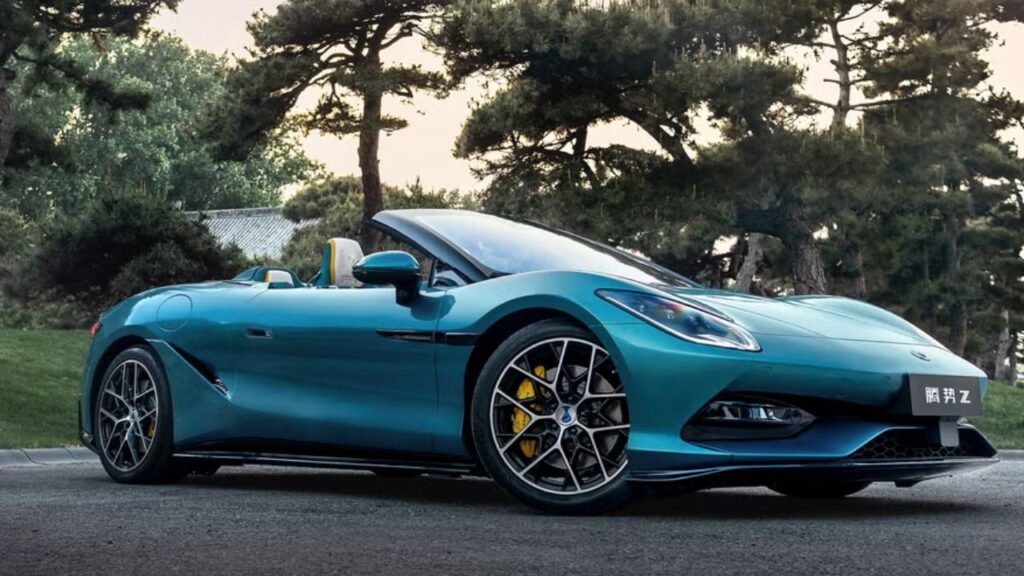
If there was one singular vehicle that stopped foot traffic dead in its tracks at the Beijing Auto Show 2026, it was the Denza Z. Originally teased to the world as a design study in Shanghai last year, BYD’s luxury subsidiary has officially greenlit this electric supercar for production. And they aren’t holding back. Buyers will be able to choose their preferred flavor of adrenaline: a sleek hardtop coupe, a wind-in-your-hair soft-top convertible, or a stripped-down, aggressively aero-kitted track model.
But it’s the numbers that truly boggle the mind. The Denza Z’s electric powertrain pumps out an astonishing 1,000-plus horsepower. According to the manufacturer, that translates to a zero-to-62-mph sprint in under 2.0 seconds. To put that in perspective, that’s faster than a multi-million-dollar Bugatti Chiron, achieved without burning a single drop of premium unleaded.
Of course, straight-line speed in an EV is relatively easy to achieve these days. What makes the Denza Z fascinating is its chassis dynamics. The car features a state-of-the-art steer-by-wire setup—eliminating the physical connection between the steering wheel and the tires—paired with advanced magnetorheological dampers that can adjust stiffness thousands of times per second.
More Read

And for those worried about range anxiety during a track day? BYD claims their proprietary flash charging system allows the Z to gulp down electricity at an eye-watering rate of up to 1,500 kilowatts on specially designed chargers.
“What we are witnessing with the Denza Z is the democratization of hypercar performance. Ten years ago, sub-two-second acceleration required a hyper-specialized internal combustion engine and millions of dollars in R&D. Today, Chinese automakers are packaging that performance into production EVs, forcing legacy European brands into a very uncomfortable corner.” — Marcus Vance, Senior Automotive Analyst, Global Auto Intelligence
Fangchengbao: Taking Aim at Porsche
The Denza Z wasn’t the only high-performance machine from the BYD umbrella causing a stir. The company’s Fangchengbao division—traditionally known for building rugged, boxy off-road SUVs—completely flipped the script this year.
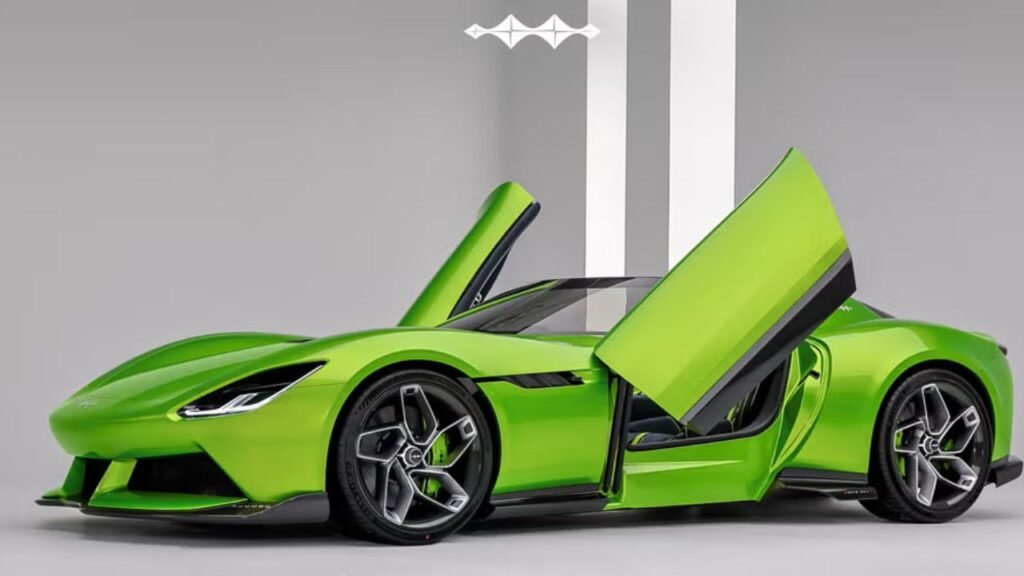
First up was the Formula X. If you thought the Denza Z was wild, the Formula X looks like it was driven straight off the set of a sci-fi movie. Evolving from the gorgeous Super 9 speedster concept shown in 2024, this radical convertible features sultry, flowing styling with a long hood and curvaceous fenders that evoke the classic proportions of a 1960s European roadster. Underneath the heavily carbon-fiber bodywork sits an electric tri-motor powertrain that reportedly mirrors the Denza’s 1,000 horsepower and delivers a neck-snapping 737 pound-feet of torque. We expect the final production version of the Formula X to hit the Chinese EV market sometime next year.
But Fangchengbao didn’t stop at speedsters. In a direct shot across the bow of Stuttgart, they unveiled three new production models under the “Formula” moniker: the Formula S sedan, a stretched Formula SL executive sedan, and a breathtaking Formula S GT wagon.
These aren’t just design exercises; they are direct, unapologetic competitors to the Porsche Panamera and Taycan. Wearing sleek, low-slung styling, this new family of cars utilizes a bleeding-edge 800-volt electric architecture for ultra-fast charging and sustained high-speed performance. Packing the same 1,000-hp tri-motor setup, these luxury bruisers are set to go on sale in China later this year.
Technical breakdown of the benefits of 800-volt EV architectures in high-performance vehicles.
European Counterattacks: Peugeot’s Feline Concepts
While domestic brands dominated the performance conversation at the Beijing Auto Show 2026, legacy European automakers weren’t completely absent. They know they have to fight for relevance in the rapidly evolving Chinese EV market, which is currently the largest and most competitive in the world.
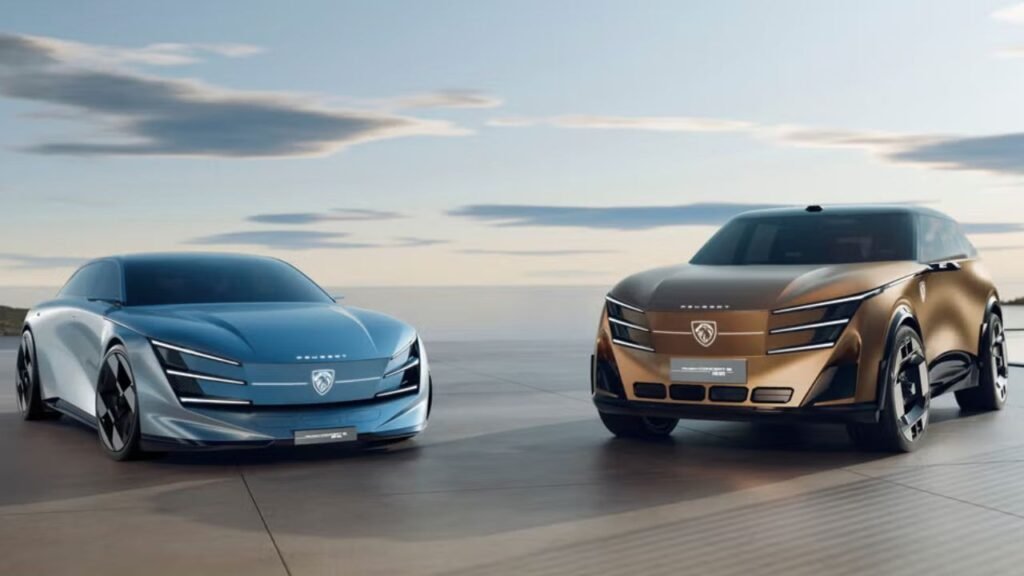
French automaker Peugeot arrived in Beijing with a pair of highly stylized, eye-catching new concept cars that preview a fresh arsenal of large sedans and SUVs designed specifically for Chinese consumers.
Interestingly, Peugeot remained tight-lipped on the technical details. There were no boastful horsepower figures or zero-to-sixty times shared during the press conference. Instead, the focus was entirely centered on a bold, aggressive new design language.
The Concept 6 takes the form of a sleek, low-riding wagon—a body style that is surprisingly seeing a resurgence in popularity among Chinese luxury buyers. The Concept 7 (or Concept 8, depending on the translated press materials) is a taller, more imposing SUV. Both models share a fierce, unified front-end design dominated by a trio of sharp, horizontal LED light lines. It’s a clever, modern emulation of the claw marks that Peugeot’s iconic lion mascot might leave behind. The bodywork is taut, covered in crisp creases that give both models a fierce, undeniable presence on the show floor. It’s a strong statement from a brand trying to carve out a premium niche in a crowded space.
Geely’s Sleeper Hit: The Lynk & Co “Time to Shine” GT
You can always count on the Beijing Auto Show to deliver at least one incredibly cool car with a slightly perplexing, translated name. This year, that honor goes to Lynk & Co—a brand operating under the massive Geely umbrella alongside Volvo, Polestar, and Lotus.
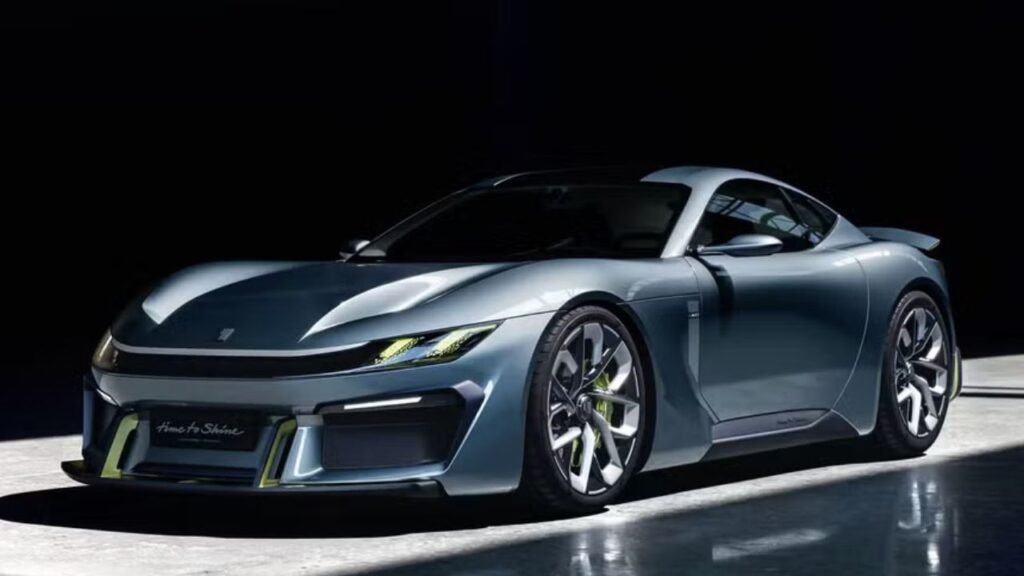
They unveiled an absolutely stunning two-door grand tourer dubbed the “Time to Shine” GT. Ridiculous name aside, this concept is a bona fide showstopper. It features an assertive but elegantly restrained face, the classic long hood of a traditional GT car, and powerful, muscular creases flowing across the side profile.
It’s not just a static sculpture, either. The “Time to Shine” features active aerodynamics; when the driver engages performance mode, a hidden front splitter extends, a prominent rear wing deploys from the trunk lid, and the entire air suspension system drops the car by 0.6 inches to hug the tarmac.
Lynk & Co representatives stated the GT is rear-wheel drive and can zip to 62 mph in under 2.0 seconds. However, they left the automotive press with a massive, lingering question: they deliberately did not specify the powertrain. Is it purely electric, leveraging the Geely group’s vast EV parts bin? Is it a high-performance plug-in hybrid? Or is it hiding a bespoke internal combustion engine under that massive hood? That mystery only added to the car’s allure, making it one of the most talked-about reveals of the week.
The Economics of Speed: The Leapmotor B05 Ultra
Amidst the dizzying array of 1,000-horsepower, million-dollar hypercars, we have to talk about a vehicle that is arguably much more important to the future of the automotive enthusiast: the Leapmotor B05 Ultra.
Sold domestically in China as the Lafa5 Ultra, this sporty compact car is vastly more down-to-earth than the Denza Z or the Lynk & Co GT. But we are highlighting it because it perfectly illustrates a crucial, industry-shifting trend: just how shockingly affordable high-performance EVs have become in China.
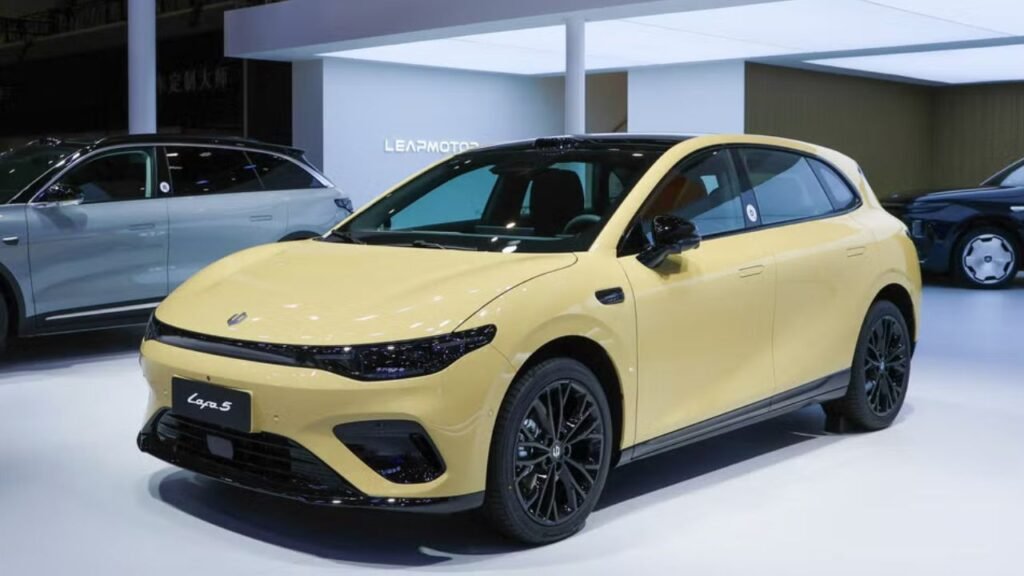
Leapmotor is a rising star in the EV startup world, so much so that automotive giant Stellantis recently purchased a roughly 20 percent stake in the company to help launch their vehicles in European markets.
Measuring 176.7 inches long, the B05 is roughly the size and footprint of a Mazda 3 hatchback. The “Ultra” badge signifies the sporty variant, which packs a potent rear-mounted 241-horsepower electric motor. Leapmotor claims this unassuming hatchback will accelerate to 62 mph in the low five-second range—placing it squarely in Volkswagen Golf GTI territory—while still providing a highly practical 300-plus miles of driving range on a single charge.
But here is the real kicker, and the reason legacy automakers are losing sleep. The regular, non-performance B05 will cost roughly $31,000 when it lands in Europe. In China, however, the high-performance B05 Ultra will reportedly retail for an astonishingly low $18,135.
“The pricing delta between Chinese domestic models and their Western equivalents is no longer just about cheap labor; it’s about absolute supply chain supremacy. When a company like Leapmotor can offer a 240-horsepower, 300-mile EV for under $20,000, it completely shatters the traditional pricing matrix of the global auto industry.” — Dr. Elena Rostova, Director of Future Mobility Studies, International Automotive Institute
You read that right. For the price of a stripped-down, base-model economy car in the West, Chinese buyers are getting a rear-wheel-drive electric hot hatch that can outrun most sports cars from a decade ago. It is a sobering reminder of the sheer scale and efficiency of the Chinese EV market.
The Checkered Flag: What This Means for the Future
As the spotlights dim and the massive displays are disassembled, the overarching narrative of the Beijing Auto Show 2026 is crystal clear. We are no longer waiting for the electric performance revolution; it is already here, and it is moving at a breakneck pace.
From the physics-bending 1,000-horsepower acceleration of the Denza Z and Fangchengbao Formula X to the jaw-dropping affordability of the Leapmotor B05 Ultra, the vehicles debuted on this show floor prove that the era of the compromised, sluggish electric vehicle is definitively dead and buried.
Automotive enthusiasts who have been clinging to internal combustion out of fear that the future would be boring can officially exhale. If the wild concepts and engineering marvels showcased in Beijing this year are any indication, the next decade of automotive performance is going to be faster, more radical, and more exciting than anything we’ve seen before. The game hasn’t just changed; it’s been completely rewritten.