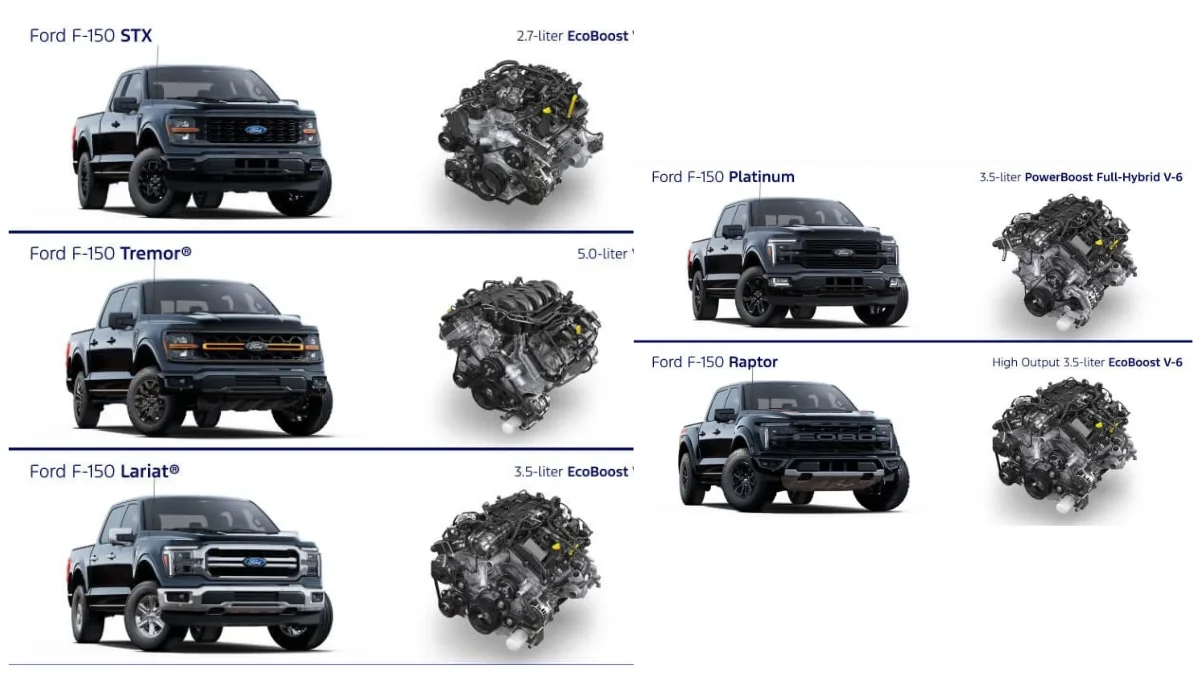


Ford’s own 2026 F-150 pages disagree on horsepower. On October 2, 2026, its Lariat page listed 382 hp for the regular 3.5-liter EcoBoost, while the main F-150 page listed 400 hp. The 2026 Ford F-150 engine changes deserve a build-specific comparison, not a blanket claim that every truck lost power.
Quick answer
Confirmed 2026 changes include PowerBoost availability on STX and rear-wheel-drive hybrid configurations. Ford also confirmed gasoline particulate filters for the regular 3.5-liter EcoBoost and PowerBoost through published reporting. Ford’s March 2026 documents disagree on horsepower, so verify the rating for your exact truck before buying.
Which 2026 Ford F-150 engine changes are confirmed?
Ford’s August 27, 2025 model-year announcement makes the purchasing changes clear: PowerBoost reaches STX 200A, and the regular 3.5-liter EcoBoost becomes standard on more configurations. Comparing 2025 and 2026 F150 engines starts with familiar engine families, rather than a replacement lineup.
Ford’s announcement puts the regular 3.5-liter EcoBoost standard on the 157-inch-wheelbase XL and XLT. It also becomes standard on Lariat 4×2 and Tremor. Check engine option pricing rather than assume your previous model year’s engine is still included.
2026 F150 engine options compared with 2025
The historical baseline is Ford’s 2025 towing guide, revised January 10, 2025. That document is more than 18 months old and is used only for that model year. The 2026 columns come from Ford’s March 10, 2026 towing guide and March 31, 2026 technical sheet.
| Engine | 2025 guide, hp | 2026 towing guide, hp | 2026 technical sheet, hp |
|---|---|---|---|
| 2.7-liter EcoBoost V6 | 325 | 325 | 325 |
| Regular 3.5-liter EcoBoost V6 | 400 | 382 | 400 |
| 3.5-liter PowerBoost hybrid V6 | 430 | 420 | 430 |
| 5.0-liter V8 | 400 | 400 | 400 |
| Raptor 3.5-liter high-output V6 | 450 | 450 | 450 |
| Raptor R 5.2-liter supercharged V8 | 720 | 720 | 720 |
PowerBoost figures represent combined gasoline-and-electric output, as Ford explains in the March 31 technical sheet. They aren’t the gasoline engine’s output in isolation.
Why do 2026 F150 3.5 EcoBoost horsepower figures differ?
Read Ford’s March 10 towing guide alone and you’d conclude that the regular EcoBoost lost 18 hp and the hybrid lost 10 hp versus the 2025 baseline. But Ford’s March 31 technical specifications repeat the earlier 400 hp and 430 hp ratings. These are competing manufacturer documents, not estimates from different dealerships.
The live webpages don’t settle it. Checked October 2, 2026, Ford’s Lariat FAQ matches the lower ratings, while the main F-150 page uses the higher ones. A later document date doesn’t prove that Ford withdrew the lower ratings; none of the reviewed documents explains that sequence.
Both March 2026 Ford tables give 500 pound-feet of peak torque for the regular EcoBoost and 570 for PowerBoost. Peak torque and peak horsepower occur at different engine speeds, so matching peak torque doesn’t establish matching output throughout the rev range. Those figures alone can’t tell you how a loaded truck feels on a hill.
Ford’s April 30, 2026 order guide distinguishes federal/non-California and 50-state emissions packages. It doesn’t map the competing horsepower figures to those packages. Don’t assume that geography explains the difference without Ford documentation.
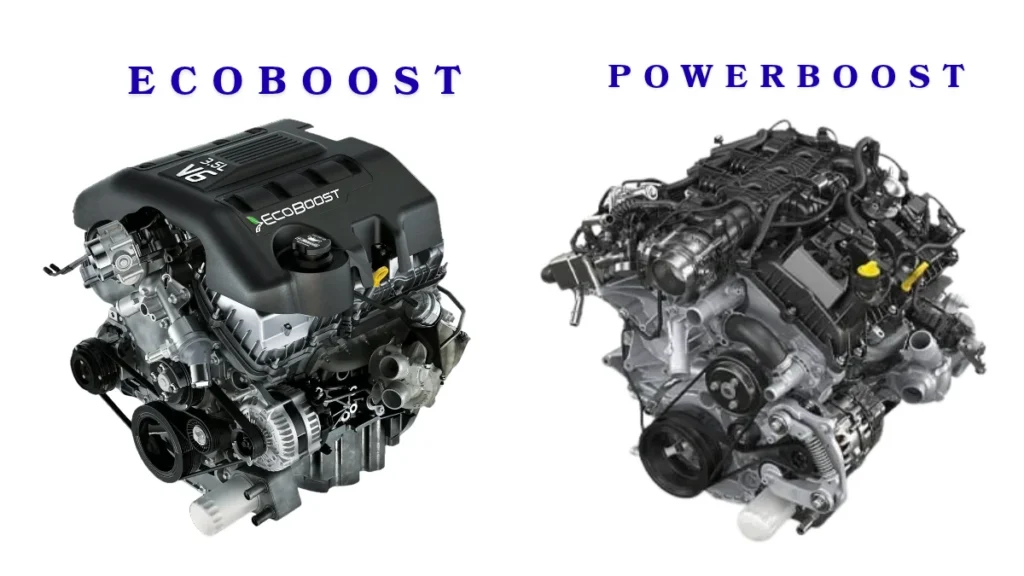
What does the gasoline particulate filter actually change?
On November 13, 2025, Pickup Truck + SUV Talk reporter Tim Esterdahl reported that Dawn McKenzie, Ford’s truck communications manager, confirmed gasoline particulate filters for the 3.5-liter EcoBoost and PowerBoost. That’s attributable confirmation of an exhaust-system change. It doesn’t reconcile Ford’s later horsepower tables.
A gasoline particulate filter captures soot in the exhaust. Ford’s Ranger owner-manual explanation, undated and checked October 2, 2026, says accumulated particles can restrict the filter; regeneration removes them by converting them to gases. Engine controls manage that process.
That manual explains the technology, not service instructions for this F-150. Use the manual matched to your truck’s equipment rather than borrow a diesel truck’s regeneration procedures. The distinction matters because a description of how filters work isn’t a model-specific maintenance schedule.
The announcement doesn’t establish long-term failure rates or repair costs. Nor does a filter’s presence prove an identical power loss on every configuration. Those questions need evidence beyond the fact that Ford added an exhaust component.
Already own an older EcoBoost? Our guide to 2011 F150 EcoBoost engine problems covers that earlier model year; it shouldn’t be used as evidence about 2026 filter durability.
Which 2026 F150 PowerBoost changes affect your order?
Ford’s August 27, 2025 announcement adds PowerBoost to STX 200A. Its April 30, 2026 order guide adds a practical restriction: the STX hybrid is SuperCrew-only, and the option doesn’t appear in the 200B or 201A FX4 columns. An STX badge alone won’t tell you whether the truck can have the hybrid.
The build date changes your hybrid choices
The April 30 guide’s Job 2 update applies to vehicles built on or after April 6, 2026. It adds PowerBoost 4×2 availability on STX, XLT, Lariat, King Ranch and Platinum. Early and later 2026 inventory therefore needn’t offer the same combinations.
Check the emissions restrictions before assuming you can order one. The STX table excludes PowerBoost 4×2 from the 50-state emissions package, so ask the dealer which configuration is orderable for your registration state.
The hybrid badge doesn’t guarantee the larger generator
Ford’s August 27, 2025 update makes 2.4-kW Pro Power Onboard standard with PowerBoost on King Ranch and Platinum. It lists 7.2 kW as an option on King Ranch and Platinum 700A, with different inclusion rules on higher Platinum equipment groups.
When you compare dealer quotes, keep generator output separate from engine output. A hybrid badge doesn’t specify which electrical system you’re buying, and a worksite power requirement belongs on the order rather than in an assumption.
Before you compare an STX hybrid quote with an XLT quote, match the equipment group, confirm the cab, check the generator option, and establish whether both trucks have the same drive configuration, because a price difference that appears to buy a different engine may actually buy a differently equipped truck. Compare like for like.
Does the V8 stay, and what happens to towing?
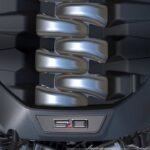
Ford hasn’t deleted the 5.0-liter V8. Its Tremor page, checked October 2, 2026, lists the 3.5-liter EcoBoost as standard and the V8 as optional, with 400 hp and 410 pound-feet of torque. Specify the engine in your quote; a trim name isn’t an engine code.
For towing, Ford’s January 10, 2025 guide and March 10, 2026 guide both list a 13,500-pound maximum for the regular 3.5-liter EcoBoost. Ford’s current F-150 page, checked October 2, 2026, identifies the maximum-tow example as an XLT SuperCrew 4×4 with a 6.5-foot box and the required towing equipment. Don’t transfer that rating to a differently equipped truck.
PowerBoost needs a separate comparison. Ford’s March 31, 2026 technical sheet lists maximum conventional towing of 12,400 pounds for the rear-wheel-drive hybrid and 11,600 pounds for four-wheel drive, with the required equipment. Those figures describe different configurations, so the hybrid badge alone doesn’t establish your limit.
Why the STX Lobo needs its own towing check
Ford’s August 27, 2025 update removes the Tow/Haul Package from STX trucks with the Lobo Package. Its March 10, 2026 towing guide requires Tow/Haul and Max Tow Axle equipment for the V8’s 12,800-pound maximum.
Taken together, those rules mean you shouldn’t apply the V8’s maximum rating to a Lobo simply because it has the same displacement. Ask for the rating of that specific configuration, not the largest number listed beside the engine.
Cross-shopping Chevrolet? Apply the same build-checking approach with our 2026 Chevy Silverado 1500 towing capacity guide before comparing the advertised maximums.
Questions buyers ask about the 2026 engines
How much horsepower does the 2026 F150 3.5 EcoBoost have?
Ford’s March 10, 2026 towing guide lists 382 hp, while its March 31, 2026 technical sheet lists 400 hp. Both list 500 pound-feet of torque for the regular 3.5-liter EcoBoost. Neither document explains that difference, so ask Ford or the dealer to confirm the applicable rating for the exact build you’re buying.
Is Ford dropping the 5.0 V8 for the 2026 F150?
No. Ford’s Tremor page, checked October 2, 2026, still lists the 5.0-liter V8 as an option, with 400 hp and 410 pound-feet of torque. The 3.5-liter EcoBoost is standard on the Tremor. A trim name alone doesn’t guarantee V8 equipment, so check the engine specification on the truck you’re considering.
Can you get a 2026 F150 STX with PowerBoost?
Yes. Ford’s August 27, 2025 model-year announcement added PowerBoost to the STX 200A equipment group, and its STX page checked October 2, 2026 lists the hybrid as an available engine. Don’t assume every STX has the hybrid; compare the engine entry on each truck’s window sticker before comparing prices.
How much can the 2026 F150 tow?
Ford’s F-150 page, checked October 2, 2026, advertises up to 13,500 pounds with the correct 3.5-liter EcoBoost configuration. Its maximum-tow example is an XLT SuperCrew 4×4 with a 6.5-foot bed and required towing equipment. That’s a lineup maximum, not approval to tow that weight with any F-150; check truck-specific ratings and payload.
Read the payload label before you sign
Ford’s March 2026 towing guide directs you to the individual truck’s doorjamb carrying-capacity label. That label answers a different question from horsepower: how much added weight the truck can carry.
Here’s an illustrative calculation, not an actual Ford rating. Start with a 1,700-pound payload label. An 800-pound trailer load on the hitch leaves 900 pounds.
Next, 600 pounds of occupants and baggage leaves 300 pounds. Add 100 pounds of hitch hardware, and just 200 pounds remain. You still have to meet axle and combined-weight ratings; passing this subtraction doesn’t clear the whole combination.
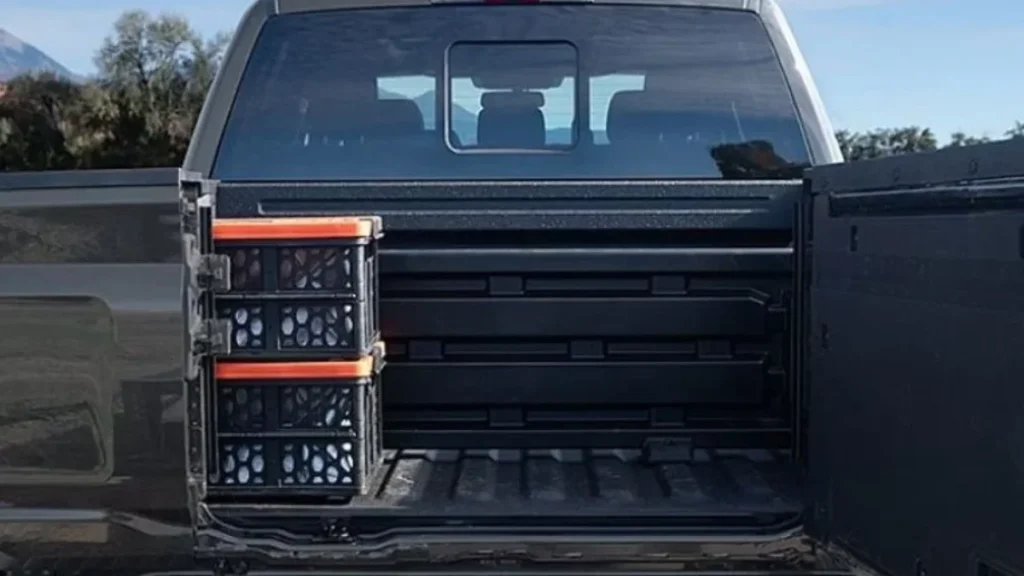
The 2026 Ford F-150 engine changes shouldn’t distract you from that calculation. Add another 250 pounds of gear and this example truck is 50 pounds over its rated payload.