Beginning with the 2027 model year, all configurations of the vehicle—regardless of whether they are specified with front-wheel drive (FWD) or all-wheel drive (AWD)—will feature a traditional, step-gear eight-speed automatic transmission “. This decisive engineering shift, recently confirmed by GM’s internal vehicle order guides, marks a profound strategic pivot and a significant victory for automotive enthusiasts who have consistently criticized the lackluster driving dynamics and “rubber band” acceleration characteristics intrinsically associated with CVTs.
Currently, the continuously variable automatic transmission operates as the standard baseline equipment exclusively on front-wheel-drive configurations of the Equinox, while the superior eight-speed automatic has been reserved solely for all-wheel-drive models “. By standardizing the GM 8-speed automatic across the entirety of the 2027 Chevy Equinox lineup, General Motors is streamlining its manufacturing complexities while simultaneously responding to intense consumer demand for superior driving engagement and long-term mechanical reliability.
This comprehensive report explores the multi-faceted engineering, economic, and strategic dimensions of this powertrain transition, evaluating the historical context of the CVT, the mechanical advantages of the impending eight-speed automatic, the overarching macroeconomic pressures shaping OEM production in 2026, and the critical design updates that define the forthcoming 2027 Chevy Equinox.
The Engineering Realities: The Rise and Fall of the CVT in Compact SUVs
To fully contextualize the importance of the 2027 Chevy Equinox transmission upgrade, it is imperative to analyze the fundamental engineering mechanics of the continuously variable transmission, its theoretical benefits, and the severe operational compromises that ultimately led to its discontinuation in this model line.
The Mechanics of Continuous Variance
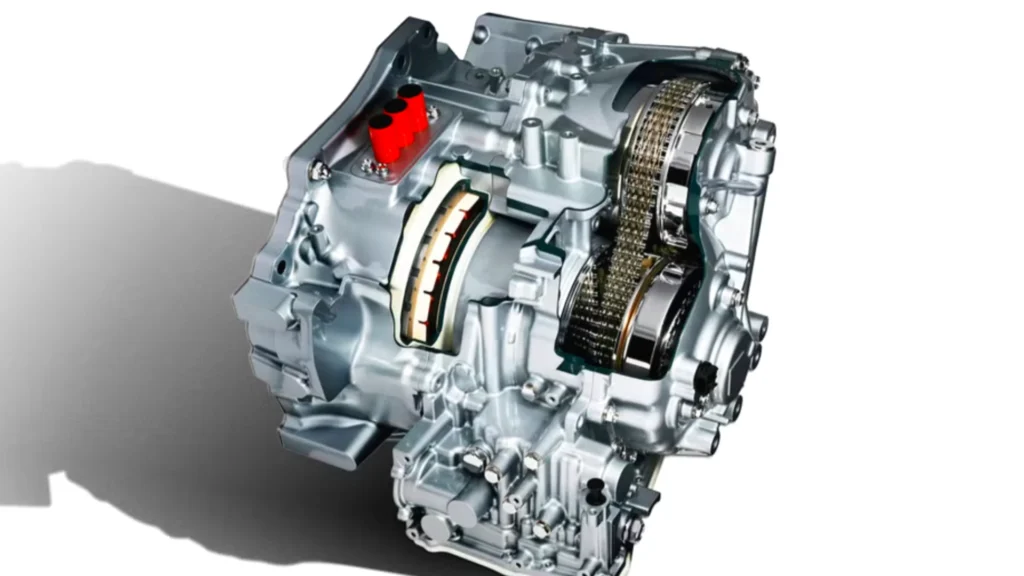
Unlike a traditional automatic transmission, which utilizes a highly complex arrangement of epicyclic planetary gearsets, multi-plate clutch packs, and a hydrodynamic torque converter to shift between a fixed number of discrete gear ratios, the CVT operates on a principle of infinite variance. Mechanically, the predominant CVT architecture found in modern compact SUVs utilizes a Van Doorne pushbelt system or a high-tensile steel chain suspended between two variable-diameter, cone-shaped pulleys.
The primary input pulley is driven directly by the engine’s crankshaft, while the secondary output pulley transmits rotational force to the vehicle’s drive axles. As the vehicle accelerates, an internal hydraulic control module alters the fluid pressure within the transmission, simultaneously forcing the cones of the input pulley closer together while moving the cones of the output pulley further apart. This dynamic action forces the steel belt to ride higher or lower on the pulleys, seamlessly altering the drive ratio without any physical interruption of power.
The theoretical elegance of this system is formidable. Because the transmission is not bound by a fixed number of gears, it can continuously adjust the ratio to lock the engine at its absolute optimal revolutions per minute (RPM) for any given driving scenario . If the driver demands maximum acceleration, the CVT immediately adjusts the pulleys to hold the engine at its peak horsepower RPM. If the driver is cruising on a flat highway, the transmission adjusts to an extreme overdrive ratio, dropping the engine speed to a mere idle to maximize fuel efficiency .

A History of Innovation and Consumer Dissonance
The concept of a gearless transmission is not a modern phenomenon. The first CVT utilized in a mass-production model in the United States was the 1989 Subaru Justy GL, a subcompact vehicle that leveraged the technology to extract maximum usability from an exceedingly small, low-output engine. In the decades that followed, manufacturers across the globe invested billions of dollars into scaling CVT technology, billing it as the ultimate technical solution to a problem few drivers were even aware of: the fractional loss of efficiency during traditional gear shifts.
CVTs promised to exponentially increase fuel efficiency while simultaneously smoothing out vehicle acceleration qualities. Furthermore, because CVTs generally required fewer total moving parts than a six, eight, or ten-speed planetary automatic transmission, they potentially translated into significant manufacturing savings for the automaker—savings that, in theory, could be passed along to the consumer.
However, the real-world application of this technology in larger, heavier vehicles like the Chevrolet Equinox generated immense consumer dissonance. The primary engineering complaint is a phenomenon colloquially known as the “rubber band” effect. Because engine speed does not correlate linearly with vehicle acceleration in a CVT, drivers experience a severe auditory and sensory disconnect. When the driver depresses the accelerator pedal, the engine immediately jumps to a high RPM and emits a constant, mid-range groan while the transmission pulleys slowly adjust to bring the vehicle’s speed into alignment with the engine’s output.
For generations of older drivers, and specifically for automotive enthusiasts accustomed to the rising and falling crescendo of an engine climbing through a distinct rev range until the transmission swaps a gear, the CVT sensation is entirely alien and fundamentally unrefined.
“
“The shift away from CVTs in the North American compact SUV segment represents a critical pivot toward consumer satisfaction over theoretical efficiency,” notes an automotive engineering analyst specializing in powertrain dynamics. “While a CVT can optimize a highly specific EPA test cycle, the resultant driving experience in a 3,500-pound vehicle is often described by consumers as sluggish, loud, and unnerving. Manufacturers are increasingly realizing that the marginal gains in fuel economy simply do not justify the damage inflicted upon the vehicle’s perceived quality and driving engagement.”
The GM 8-Speed Automatic: Mechanical Superiority and the End of the “Rubber Band” Era
The confirmation that the Chevy Equinox CVT discontinued its run for the 2027 model year heralds the universal adoption of General Motors’ eight-speed automatic transmission (internal order code RPO GF8) across the entirety of the model range. This transition fundamentally alters the dynamic profile of the front-wheel-drive Equinox, aligning its performance characteristics with the expectations of the North American automotive market.
Planetary Gearsets and Torque Multiplication
The eight-speed automatic transmission is a marvel of modern fluid dynamics and mechanical engineering. It relies on a series of interconnected planetary gearsets—each comprising a central sun gear, multiple planet gears mounted to a carrier, and an outer ring gear. By selectively applying hydraulic pressure to specific multi-plate clutch packs and band brakes, the transmission’s electronic control unit can lock or unlock different components of these planetary sets, routing power through eight distinct forward gear ratios.
Crucially, the eight-speed automatic interfaces with the engine via a hydrodynamic torque converter, entirely eliminating the direct physical connection utilized in a CVT’s pulley system. The torque converter utilizes a fluid coupling—consisting of an impeller driven by the engine, a turbine connected to the transmission input shaft, and a central stator—to transfer rotational force. At low speeds, this fluid coupling inherently multiplies the engine’s torque output, providing the vehicle with immediate, punchy acceleration from a standstill that a CVT fundamentally cannot replicate.
| Specification Parameter | Continuously Variable Transmission (CVT) | GM 8-Speed Automatic Transmission (RPO GF8) |
| Mechanical Architecture | Variable pulleys, pushbelt/chain | Planetary gearsets, clutch packs, torque converter |
| Acceleration Profile | Nonlinear, constant RPM (“rubber band”) | Linear, stepped gear shifts, rising/falling RPM |
| Driver Sensation | Disconnected, prone to mid-range droning | Responsive, visceral, traditional shift feel |
| Low-Speed Dynamics | Direct engagement, limited torque burst | Hydrodynamic torque multiplication via stator |
| Efficiency Strategy | Infinite optimal engine RPM holding | Multiple deep overdrive ratios for highway cruising |
Performance Enhancements and Torque Unlocking
The integration of the 8-speed automatic into the front-wheel-drive Equinox is not merely a qualitative upgrade in shift feel; it delivers a quantifiable enhancement to the vehicle’s total mechanical output. In previous model years, General Motors paired its ubiquitous 1.5-liter turbocharged inline-four engine with both the CVT and the eight-speed automatic, but the engine’s output was strictly governed based on the transmission it was mated to “.
When paired with the CVT in the front-wheel-drive models, the 1.5-liter engine was electronically limited to producing 184 lb-ft of torque. This artificial limitation was widely understood by automotive engineers to be a protective measure designed to preserve the longevity of the CVT’s internal steel pushbelt, which is highly susceptible to wear and scoring under sudden spikes in rotational force.
However, when the exact same 1.5-liter turbocharged engine was mated to the more robust eight-speed automatic in all-wheel-drive configurations, it was unlocked to produce its full 203 lb-ft of torque “. Furthermore, the AWD models equipped with the 8-speed automatic featured a significantly higher tow rating of 1,500 pounds, compared to the severely limited 800-pound capacity of the CVT-equipped FWD variants.
With the standardization of the 8-speed automatic for the 2027 Chevy Equinox transmission lineup, front-wheel-drive buyers will finally benefit from the unrestricted 203 lb-ft of torque, resulting in vastly improved passing power, superior low-end responsiveness, and a more confident driving experience.
Analyzing the Fuel Economy Trade-off
The primary counterargument against the elimination of the CVT has historically centered on fuel efficiency. Automakers utilize CVTs specifically because they offer a reliable method for maximizing miles per gallon (MPG) to meet increasingly stringent federal corporate average fuel economy (CAFE) standards.
The switch in transmissions necessitates a completely different final drive ratio. For the 2026 model year, order guides listed a final drive ratio of 5.81:1 for the CVT-equipped FWD models, while the 8-speed-equipped AWD models utilized a 3.47:1 ratio “. While official EPA fuel economy certification for the 2027 Equinox is currently underway and unreleased by General Motors, historical data provides a clear indicator of the expected variance.
In the 2026 model year, the EPA rated the 8-speed automatic Equinox with the exact same 29 mpg highway rating as the CVT variant. Modern step-gear automatics with eight or more forward gears utilize highly aggressive overdrive ratios (where the output shaft spins faster than the input shaft) to drop engine RPMs to idle speeds during highway cruising, effectively neutralizing the CVT’s traditional highway advantage.
However, the CVT did maintain a fractional advantage in urban environments, resulting in a 1 mpg deficit for the automatic in city driving “. Overall, the 2026 automatic was rated at 26 mpg combined, while the CVT was rated at 27 mpg combined. For the vast majority of automotive enthusiasts and daily commuters, sacrificing a single mile per gallon in exchange for a vastly superior, more reliable, and far more engaging 8-speed automatic is a trade-off they are exceptionally eager to make.
Strategic Manufacturing: The Toledo Propulsion Systems Investment
The 2027 Equinox updates cannot be viewed purely in isolation as a response to consumer preferences; they are inextricably linked to General Motors’ broader corporate manufacturing strategy and its massive capital expenditure allocations in domestic infrastructure.
The confirmation of the transmission shift aligns perfectly with a highly publicized manufacturing announcement from Ohio state representative Elgin Rogers (D-Toledo). Representative Rogers recently announced that General Motors is committing approximately $40 million in new capital investment into its Toledo Propulsion Systems facility. The explicit, stated purpose of this multi-million dollar injection is to immediately increase manufacturing capacity and introduce a new transmission variant specifically designed to support the production of the Chevrolet Equinox and its mechanical platform sibling, the GMC Terrain.
Economies of Scale and Assembly Line Consolidation
“This investment supports local manufacturing jobs and reaffirms Ohio’s critical role in GM’s manufacturing footprint,” stated Rep. Rogers, highlighting the facility’s immense importance to the automaker. Since 2011, General Motors has invested more than $1 billion into the Toledo plant, ensuring it operates at the cutting edge of automotive component fabrication.
From a supply chain and logistics perspective, the decision to standardize the Equinox and Terrain lines on a single eight-speed automatic architecture yields massive economies of scale. Managing two entirely distinct transmission supply chains for a single vehicle model—sourcing CVT components for FWD models and planetary gearsets for AWD models—creates immense operational friction. It necessitates separate procurement contracts, divergent assembly line procedures, distinct software calibration engineering teams, and bifurcated warranty support protocols.
By aggressively eliminating the CVT entirely, General Motors consolidates its procurement and manufacturing efforts around the Toledo-built eight-speed. Even though a complex planetary step-gear transmission generally carries a higher per-unit production cost than a mechanically simpler CVT, the overarching financial savings achieved through assembly line standardization, reduced engineering complexity, and unified warranty procedures likely far exceed the initial hardware expense.
Furthermore, this structural alignment confirms that the GMC Terrain, which shares its underlying D2XX architecture with the Equinox, will also entirely ditch the CVT on its FWD models for the 2027 model year, creating total powertrain parity across GM’s compact crossover portfolio.
| Metric | Toledo Propulsion Systems Facility Profile |
| Location | Toledo, Ohio |
| Recent Capital Investment | ~$40 Million (Announced March 2026) |
| Total Investment Since 2011 | > $1 Billion |
| Stated Purpose of Funds | Increase capacity for new transmission variants |
| Supported Vehicle Lines | Chevrolet Equinox, GMC Terrain |
| Strategic Manufacturing Benefit | Assembly line consolidation, component standardization |
The Broader Industry Precedent: The Rejection of CVTs in North American SUVs
General Motors’ strategic maneuver with the 2027 Chevy Equinox is not an isolated incident; rather, it is the latest, most definitive marker in a broader, industry-wide reevaluation of powertrain preferences within the North American market. While continuously variable transmissions continue to experience steady growth in emerging global markets—particularly in Latin America, where budget-friendly models utilize CVTs to cater to urban commuters prioritizing maximum fuel efficiency over driving dynamics—the North American consumer has demonstrated a steadfast, growing resistance to the technology in larger vehicles.
The Pivot of Nissan
The most glaring precedent for GM’s pivot is the strategic reversal recently executed by Nissan. For over two decades, Nissan served as the automotive industry’s most vocal and prolific champion of CVT technology, heavily utilizing gearless transmissions supplied by its subsidiary, Jatco, across almost its entire product portfolio. Notably, the Nissan Murano, a direct competitor in the crossover space, debuted in 2003 as a global pioneer of the CVT.
However, after facing years of intense consumer backlash regarding perceived mechanical failures, overheating issues, and the universally maligned driving experience, Nissan fundamentally altered its trajectory. For the deeply revised 2025 model year, Nissan entirely abandoned the CVT in the updated Murano, replacing it with a traditional nine-speed automatic transmission “.
Engineering analyses indicate that this dramatic shift was driven by the imperative for superior durability. The metallic belts inside CVTs are highly susceptible to long-term wear, scoring, and stretching, particularly under the sustained stress of moving heavier crossover vehicles, navigating steep inclines, or during towing applications. A traditional step-gear automatic, utilizing hardened steel gears, provides a significantly longer operational lifespan and reduces the likelihood of catastrophic, warranty-voiding failure.
The parallel trajectories of the Chevy Equinox dropping its CVT and the Nissan Murano abandoning its legacy gearless setup indicate a definitive endpoint for the CVT experiment in mid-level North American SUVs. Consumers increasingly view these vehicles not merely as disposable transportation appliances, but as significant financial investments that must deliver a refined, confident, and durable driving experience. The industry has collectively recognized that the minor fuel efficiency gains provided by a CVT are rapidly negated by the severe damage to brand equity caused by poor drivability and perceived fragility.
Navigating the Shadows of Litigation: General Motors’ 8-Speed Legacy
While the transition away from the CVT is universally viewed by automotive enthusiasts as a vastly positive development, an objective, exhaustive analysis must acknowledge the complex and precarious history surrounding General Motors and eight-speed automatic transmissions. The celebration of the new RPO GF8 transmission in the 2027 Equinox is inherently tempered by the industry’s collective memory of the devastating mechanical flaws associated with GM’s longitudinal eight-speed automatics utilized heavily over the last decade.
The “Chevy Shake” and Class-Action Reality
General Motors has been embroiled in massive, multi-district class-action litigation (most notably Cole Ulrich, et al., v. General Motors and Speerly v. General Motors) regarding severe operational defects in its eight-speed units, specifically the 8L90 and 8L45E architectures. Consumers, independent mechanics, and drivetrain experts have extensively documented a terrifying phenomenon colloquially known as the “Chevy Shake” or “transmission shudder”.
Drivers of affected vehicles—which span a massive portfolio including the Chevy Silverado, Colorado, Corvette, and Camaro, as well as the GMC Sierra, Canyon, Yukon, and various Cadillac models built between 2015 and 2019—reported violent jerking, severe hesitation, and a physical sensation akin to being rear-ended by another vehicle when the transmission attempted to shift gears. The presiding federal judge, David M. Lawson, recently rejected GM’s attempt to throw out the case, noting there was substantial evidence to suggest these transmissions made the vehicles inherently unsafe to operate.
Root Cause Engineering Analysis
Deep mechanical forensics conducted by independent transmission experts have isolated the root causes of these catastrophic failures. The litigation and subsequent independent tear-downs indicate that the shudder originates from excessive friction and improper fluid distribution within the torque converter clutch.
Furthermore, mechanical analysts, such as those at NextGen Drivetrain, have identified severe, fundamental design flaws within the transmission’s hydraulic valve body. Specifically, components known as “pulse dampeners”—a series of small internal pistons and springs designed to smooth out hydraulic pressure spikes during gear engagements—were engineered with inadequate tolerances, causing them to wear out and fail prematurely. When these dampeners fail, the valve body rapidly over-pressurizes, leading to warped shift valves, erratic gear engagements, and ultimately, total clutch pack destruction. The issue became so pervasive that independent engineering firms resorted to designing custom billet plates and plug kits to permanently delete these problematic dampeners, bypassing GM’s own allegedly flawed hardware updates.
| Category | Details of General Motors 8-Speed Litigation History |
| Primary Active Lawsuits | Cole Ulrich v. General Motors, Speerly v. General Motors |
| Historically Affected Transmissions | 8L90 and 8L45E longitudinal 8-speed automatics |
| Core Mechanical Defects Identified | Torque converter friction, fluid starvation, valve body pulse dampener failure |
| Symptomatic Behavior Reported | “Chevy Shake,” violent shuddering, harsh shifting, perceived loss of vehicle control |
| Affected Vehicle Models (2015-2019) | Chevy Silverado, Colorado, Corvette, Camaro; GMC Sierra, Canyon, Yukon; Cadillac Escalade, ATS, CTS, CT6 |
Implications for the 2027 Equinox
It is structurally imperative to clarify that the transverse-mounted eight-speed automatic (GF8) slated for the front-wheel-drive-based 2027 Equinox is mechanically distinct from the longitudinal 8L90 transmission designed for rear-wheel-drive trucks and performance cars. The packaging, internal component layout, and operational parameters are entirely different.
However, the reputational damage inflicted by the 8L90 saga casts a long, unavoidable shadow over any announcement of a “new” GM eight-speed transmission. For the 2027 Equinox transition to be deemed a long-term success, General Motors must unequivocally demonstrate that the valve body architecture, pulse dampener durability, and fluid dynamic engineering in the GF8 transmission have definitively resolved the hydrostatic pressure issues that plagued their previous proprietary designs. Automotive enthusiasts are welcoming the death of the CVT, but their patience for flawed automatic transmissions is nonexistent.
The delicate nature of transmission reputation is further illustrated by GM’s relationship with Allison Transmission. In the heavy-duty truck sector, GM previously engaged in a highly publicized, vitriolic split with Allison, attempting to remove all Allison branding from its HD trucks. However, recognizing the immense, irreplaceable consumer trust placed in the Allison nameplate regarding transmission durability, GM subsequently reversed course entirely, renewing the partnership and restoring the Allison badging for the 2026 Chevy Silverado HD and GMC Sierra HD lineups “. This sequence of events underscores the absolute paramount importance of consumer perception regarding transmission reliability in the modern automotive market.
Macroeconomic Pressures and the 2026-2027 Automotive Forecast
To fully grasp the magnitude of the 2027 Equinox updates, one must analyze the macroeconomic headwinds anticipated for the late 2020s. Forecasting models from leading automotive intelligence firms project a highly constrained, fiercely competitive market environment throughout 2026 and 2027, forcing automakers to meticulously defend their profit margins, streamline their supply chains, and optimize their highest-volume products.
A Contracting Global Market
Industry data points definitively to a contracting total addressable market. Leading analysts project that total new-vehicle sales for 2026 will reach only 15.8 million units, representing a concerning 2.4% year-over-year decline from 2025 volumes “. This contraction is multifaceted. Retail sales to individual consumers are expected to decline by roughly 1.5%, while commercial fleet sales will experience a much sharper drop of 6.1% as corporate entities slow their capital expenditures in response to stagnant global economic growth. Furthermore, the expiration of key federal tax incentives on electric vehicles (EVs) and plug-in hybrids, combined with the closure of specific “leasing loopholes” that previously drove volume, are projected to drive total vehicle lease penetration down toward 21%, representing the lowest level observed in three years.
EBITDA Margin Compression
Compounding the intense pressure of declining unit volumes is a severe, industry-wide compression of OEM profitability. Global automakers have witnessed their average earnings before interest, taxes, depreciation, and amortization (EBITDA) margins decline precipitously from a peer average of nearly 11% in late 2024 to below 8% moving into the 2025-2026 window.
This massive margin erosion is driven by elevated input costs—specifically regarding raw materials and semiconductor acquisition—combined with soaring expenses associated with freight logistics, international tariffs, and the scaling costs of entirely new manufacturing processes. Additionally, OEMs bear immense, escalating costs related to regulatory compliance, proprietary software development, and rising warranty provisions tied to the rapid deployment of unproven powertrain technologies.
In this highly austere financial environment, consumer appetite is rapidly cooling under the immense weight of sustained high transaction prices and rising interest rates. Crucially, the initial, heavily subsidized surge in battery electric vehicle (BEV) adoption has definitively lost momentum. Severe affordability constraints, persistent anxieties regarding charging infrastructure gaps, and shifting policy landscapes have slowed electrification far below OEM projections, forcing automakers to pivot heavily back onto their highly profitable internal combustion engine (ICE) portfolios to generate essential cash flow.
| 2026 Automotive Market Forecast Metric | Projected Value / Trend | Implication for OEMs |
| Total New-Vehicle Sales (SAAR) | 15.8 Million Units (-2.4%) | Contracting market, heightened competition |
| Retail Sales Volume | Down 1.5% YoY | Reduced consumer purchasing power |
| Fleet Sales Volume | Down 6.1% YoY | Corporate capital expenditure slowdown |
| Total Lease Penetration | Dropping toward 21% | Lowest level in three years; incentive expiration |
| Average OEM EBITDA Margins | Below 8% (Down from 11%) | Severe profitability compression, cost-cutting required |
| Electrification Momentum | Slowing significantly | Renewed reliance on ICE vehicle profitability |
Defensive Product Strategy
The Chevrolet Equinox operates in one of the absolute most fiercely competitive and incredibly price-sensitive segments in the global automotive landscape. With current model pricing ranging from $28,800 for the base LT up to $33,600 for the premium trims, and expected inflationary increases of 3% to 5% looming for the 2027 model year, General Motors simply cannot afford product missteps that alienate buyers.
By aggressively dropping the highly criticized CVT in favor of the universally preferred eight-speed automatic, General Motors is executing a masterclass in defensive product strategy. They are proactively enhancing the perceived mechanical value, driving engagement, and overall durability of the Equinox to justify impending price increases. This strategic upgrade ensures the Equinox remains a dominant force in generating the reliable, high-volume cash flow required to fund the corporation’s broader, capital-intensive transition toward future technologies in an increasingly hostile economic environment.
Peripheral 2027 Equinox Updates: Aesthetics and Connected Security
While the monumental transmission overhaul correctly dominates the engineering and enthusiast narrative, the 2027 Chevrolet Equinox will also receive a suite of highly targeted aesthetic and technological updates designed to keep the platform feeling fresh and competitive following its comprehensive, ground-up redesign in 2025.
Shifting Color Palettes and Interior Refinement
Automotive exterior color palettes are subject to rapid, cyclical shifts in consumer taste. The muted, desaturated, earthy tones that heavily dominated the early 2020s are beginning to phase out in favor of richer, more dynamic finishes. In response to this trend, General Motors is officially retiring the polarizing Cacti Green exterior paint option from the Equinox order guides for 2027 “. In its place, Chevrolet will introduce Autumn Harvest Metallic, a sophisticated, highly metallic shade that aligns with current premium styling trends and enhances the vehicle’s road presence.
Furthermore, the interior aesthetic of the sport-oriented RS trim is undergoing a purposeful simplification. The complex, somewhat busy two-tone interior accenting, which previously featured a combination of Santorini Blue and Torch Red stitching across the dashboard and seats, will be pared down. The 2027 RS models will exclusively utilize the Torch Red interior accents, creating a much more cohesive, aggressive, and traditional sporting aesthetic that aligns with the RS (Rally Sport) lineage.
The Integration of Connected Surveillance
Technologically, the absolute most significant addition for the 2027 model year will be the delayed introduction of the highly anticipated Connected Camera system. Bundled within the optional Safety and Technology Package, this advanced feature directly leverages the vehicle’s existing, comprehensive array of exterior 360-degree lenses and interior monitoring cameras.
The system provides the vehicle owner with persistent, recording environmental surveillance capabilities, effectively operating as a factory-integrated, multi-angle dashcam. More importantly, it allows for live remote monitoring of the vehicle’s surroundings and cabin interior directly through the MyChevy smartphone application “. This seamless integration of security hardware and remote cloud accessibility directly addresses surging consumer demand for connected-car features that provide tangible, everyday peace of mind, transforming the vehicle’s sensor suite from passive safety aids (like lane-departure warnings) into active, user-controlled security assets.
| 2027 Equinox Feature Update | Description of Change | Trim Level / Package Association |
| Powertrain Overhaul | Discontinuation of CVT; standard 8-speed automatic | Universal across all trims (LT, RS, Activ) |
| Exterior Paint Palette | Cacti Green removed; Autumn Harvest Metallic added | Universal availability |
| Interior Upholstery | Santorini Blue stitching deleted; Torch Red retained | RS Trim Exclusive |
| Surveillance Technology | Introduction of Connected Camera app monitoring | Safety and Technology Package |
Aside from these specific updates, the overarching trim hierarchy will remain entirely unchanged, carrying over the foundational LT model, the street-focused sport-appearance RS, and the mechanically enhanced, off-road-adjacent Activ trims.
Conclusion
The architecture of the global automotive market is undergoing a period of intense, unprecedented recalibration. The relentless mandate for infinite fuel efficiency, which initially drove the widespread adoption of the continuously variable transmission across the compact SUV segment, has finally collided violently with the unavoidable realities of consumer dissatisfaction, mechanical frailty, and the fundamental desire for driving engagement.
The decisive move by General Motors to eradicate the CVT from the 2027 Chevrolet Equinox is not a minor, iterative engineering adjustment; it is a profound strategic pivot that acknowledges the demands of the North American automotive enthusiast. By standardizing the robust eight-speed automatic across all drive configurations, GM is fundamentally prioritizing visceral driving dynamics, unlocking the full 203 lb-ft of torque from its turbocharged powerplant, and executing a massive assembly line consolidation over fractional, unnoticeable gains in EPA-estimated fuel economy.
This maneuver aligns perfectly with broader industry trends, definitively signaling the end of the CVT’s dominance in the highly lucrative mid-size and compact SUV segments. As the industry braces for a forecasted contraction in total vehicle sales and severe margin compression heading into 2026 and 2027, OEMs must ruthlessly optimize their portfolios. By leveraging its multi-million dollar capital investment in the Toledo Propulsion Systems facility to centralize production of this step-gear transmission, General Motors achieves vital economies of scale while simultaneously delivering a product that vastly exceeds consumer expectations. Assuming the new transmission avoids the hydrostatic pitfalls of GM’s previous eight-speed architectures, the 2027 Chevrolet Equinox is positioned to remain a dominant, highly profitable, and dynamically engaging cornerstone of the modern automotive landscape.