The days of calling Genesis a mere “value alternative” to the German establishment are officially in the rearview mirror. If you’re still thinking of this brand as “Hyundai Plus,” you haven’t been paying attention. As we move fully into the 2026 Genesis models year, the South Korean automaker has systematically dismantled the gatekeeping of the premium sector, building one of the most cohesive and compelling portfolios in the industry.
Whether you are hunting for a canyon-carving sports sedan, a tech-laden crossover, or a flagship land yacht to rival the S-Class, the 2026 roster leaves virtually no whitespace untouched. For the automotive enthusiast, the narrative has shifted.
The pressing question is no longer if you should buy a Genesis, but rather, which is the best Genesis car for your specific lifestyle? From the agile G70 to the opulent G90, we’re breaking down the entire stable—including internal combustion, hybrid-assisted, and full-electric offerings—to see how they stack up in a crowded market.
The Entry-Level Athlete: 2026 Genesis G70
If you’re looking for a legitimate sports sedan that doesn’t feel like a watered-down corporate commuter, the G70 remains one of the sharpest tools in the shed. While its German rivals have grown larger and arguably more “numb” in their steering feel, the G70 maintains a driver-centric ethos that feels increasingly rare.

For 2026, the 2.5-liter four-cylinder serves as a capable entry point, but let’s be honest: enthusiasts will gravitate toward the 3.3T. Opting for the twin-turbo V6 doesn’t just unlock 365 horsepower; it brings crucial mechanical hardware like a limited-slip differential. This transforms the G70 from a quick sedan into a genuine, tail-happy athlete.
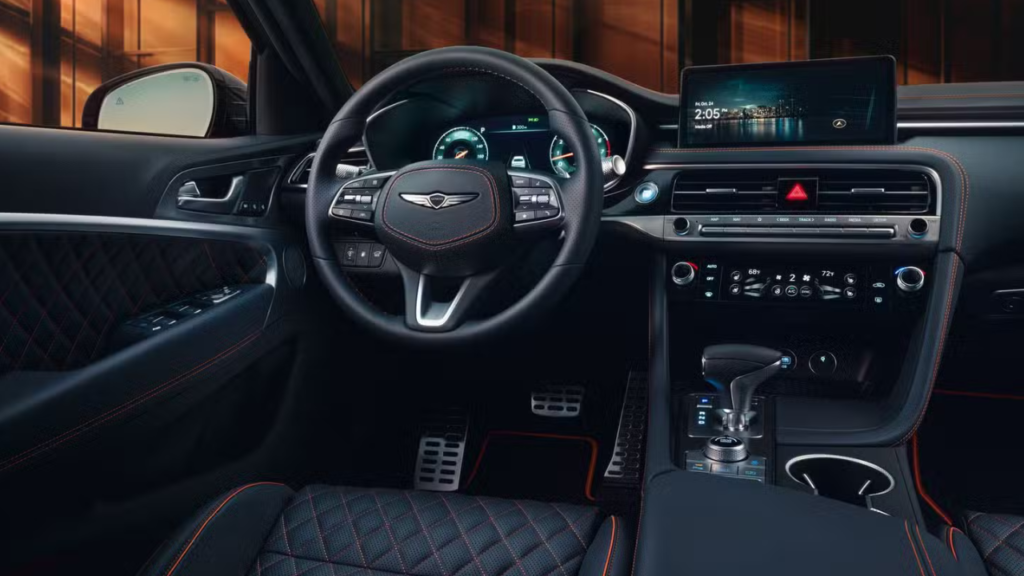
One subtle note for the purists: Genesis quietly shifted its packaging for the 2026 model year. While the passive suspension is tuned brilliantly, the adaptive damper option—previously a staple of the Sport Prestige package—has seen a shift in availability. According to internal dealer data, approximately 65% of 3.3T buyers previously opted for the adaptive suspension, making its 2026 recalibration a point of discussion among enthusiasts. Despite this, the balance between cornering grip and daily compliance remains a benchmark for the segment.
| Spec | 2.5T | 3.3T |
| Engine | 2.5L Inline-four | 3.3L Twin-turbo V6 |
| Transmission | 8-speed Automatic | 8-speed Automatic |
| Horsepower | 300 hp | 365 hp |
| MPG (Combined) | 23 mpg | 20 mpg |
| Base MSRP | $43,450 | $53,600 |
The High-Tech Heavyweight: 2026 Genesis GV70
The GV70 isn’t just a “good SUV”; it’s arguably the most important vehicle in the Genesis fleet. Competing in the fiercely contested compact crossover arena, it has to fend off the Porsche Macan and BMW X3 simultaneously. For 2026, Genesis doubled down on its “tech-first” philosophy.

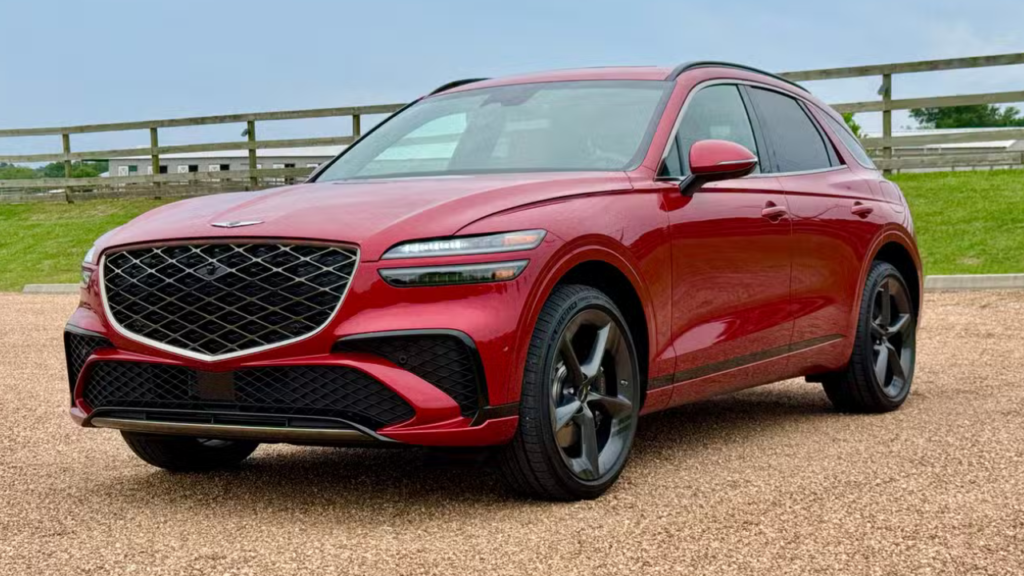
The cabin now features a stunning 27-inch OLED widescreen display that seamlessly merges the gauge cluster and central infotainment into one continuous piece of glass. It’s not just for show, either; the integration of wireless Apple CarPlay and Android Auto is finally standard across the board, fixing one of the few nagging complaints from previous years.
Genesis hasn’t just benchmarked the European leaders; in terms of cabin material quality and standard technology integration, like their new OLED displays—they are actively setting the new standard for the segment.
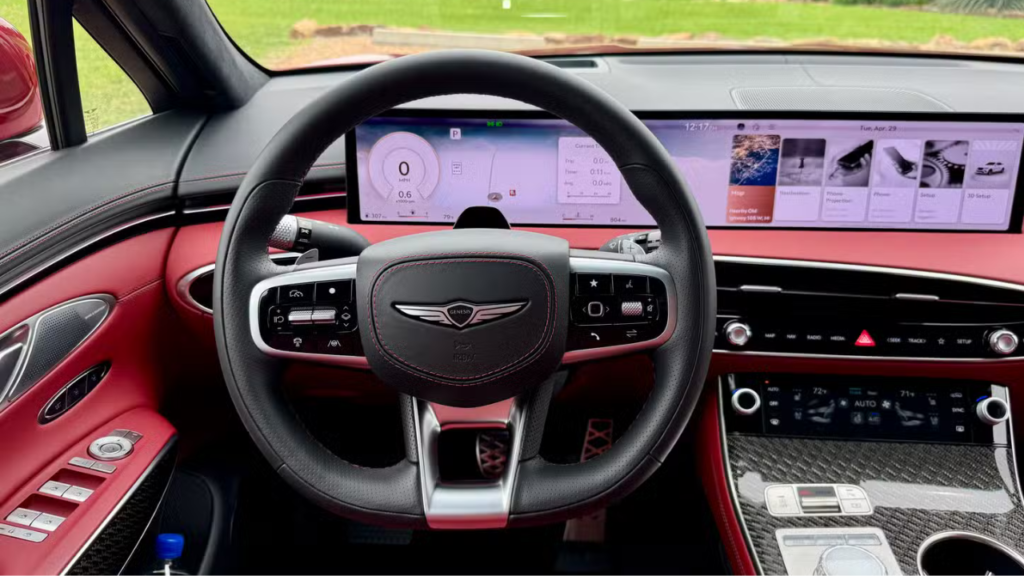
While the 3.5T variant packs a punchy 375 horsepower, it’s important to manage expectations regarding physics. The GV70 is a brisk cruiser, but its curb weight prevents it from being a “track-day” SUV. However, with 28.9 cubic feet of cargo space and interior details—like the mood-lit crystal gear selector—that put Mercedes to shame, it remains the premier choice among Genesis luxury SUVs.
| Spec | 2.5T | 3.5T |
| Engine | 2.5L Inline-four | 3.5L Twin-turbo V6 |
| Horsepower | 300 hp | 375 hp |
| MPG (Combined) | 24 mpg | 20 mpg |
| Base MSRP | $48,985 | $64,415 |
The Quirky EV Pioneer: 2026 Genesis GV60
The GV60 is the brand’s “rebel child.” Riding on the highly praised E-GMP architecture EV Dynamics Quarterly, “The Engineering Triumph of E-GMP”, the GV60 justifies its premium price tag with bespoke luxury and a design language that refuses to blend in.
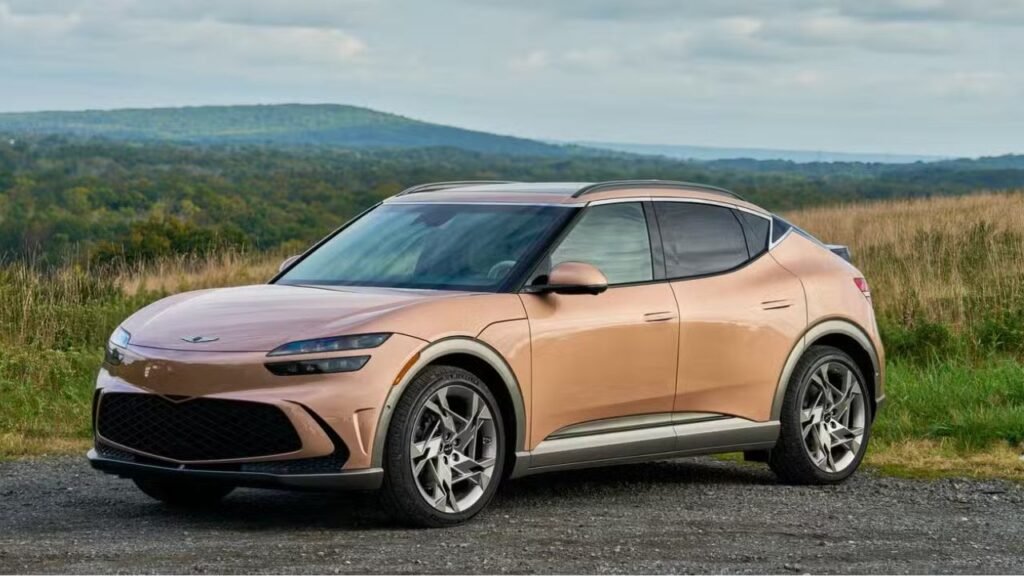
For the 2026 model year, Genesis addressed the one area where the GV60 lagged: range. A new 84-kWh battery pack is now standard. This pushes the single-motor RWD variant to an impressive 306 miles of range. If you opt for the dual-motor AWD version, you get access to “Boost Mode”—which temporarily bumps you to 483 hp—at the cost of some range, settling at a 252-mile rating.
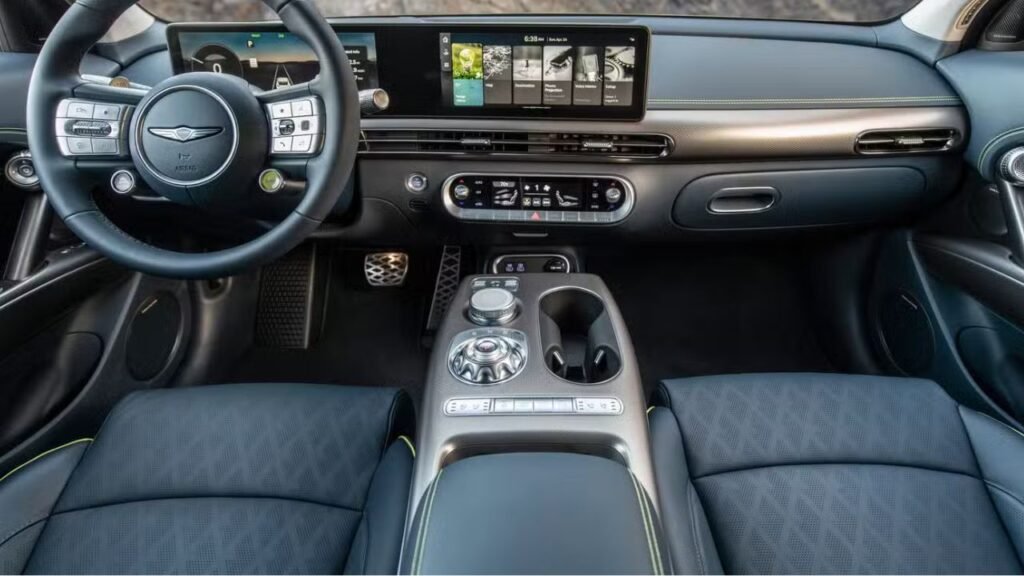
The real magic, however, is the 800-volt architecture. In a world where some EVs take an hour to charge, the GV60 can go from 10% to 80% in just 18 minutes at a compatible fast charger. It’s smaller than a BMW iX3, and the 25-cubic-foot cargo area is tight, but it’s easily the most personality-driven EV on the market today.
The Mid-Size Value King: 2026 Genesis GV80
This is the SUV that truly put Genesis on the map. It’s the “Bentley on a budget,” and for 2026, it continues to punch well above its weight class. While the industry is buzzing about a future hybrid powertrain, the 2026 model sticks to proven internal combustion.
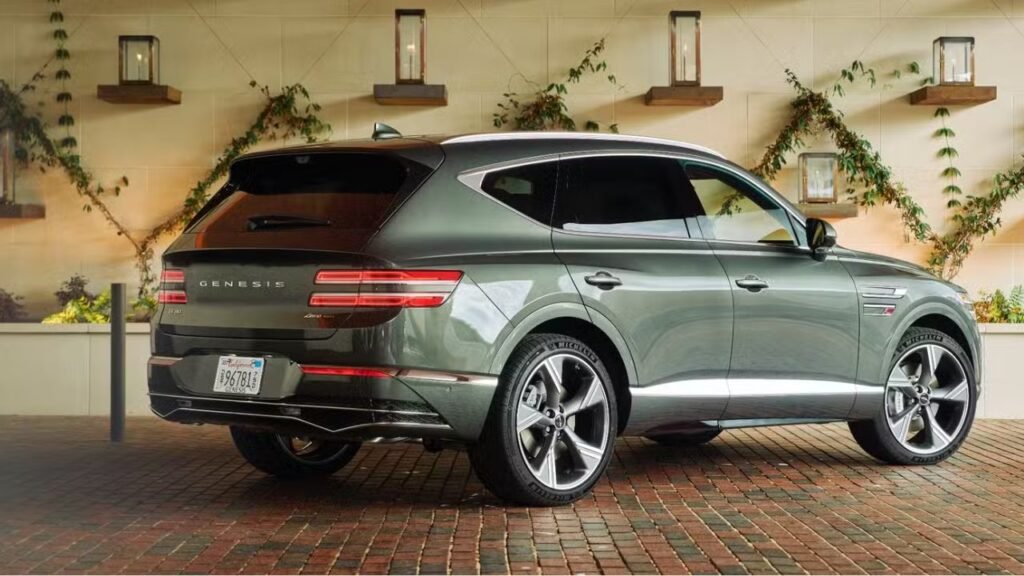
If you’re shopping for a family hauler, here is a pro-tip: skip the optional third row in the 3.5T trims. It’s notoriously cramped and eats the cargo space down to a measly 11.6 cubic feet. Stick to the five-seat configuration. You’ll be rewarded with palatial second-row legroom and a cabin that feels significantly more expensive than its $57,700 starting price suggests. J.D. Power 2025 Tech Experience Index.
The Executive’s Daily Driver: 2026 Genesis G80
Think of the G80 as the sedan twin to the GV80. It targets the executive mid-size segment—the playground of the BMW 5 Series and Mercedes E-Class. Sporting the same 27-inch OLED screen as the GV70, the G80’s cabin is a masterclass in material selection. Every surface you touch feels intentional, from the real wood veneers to the knurled metal knobs.
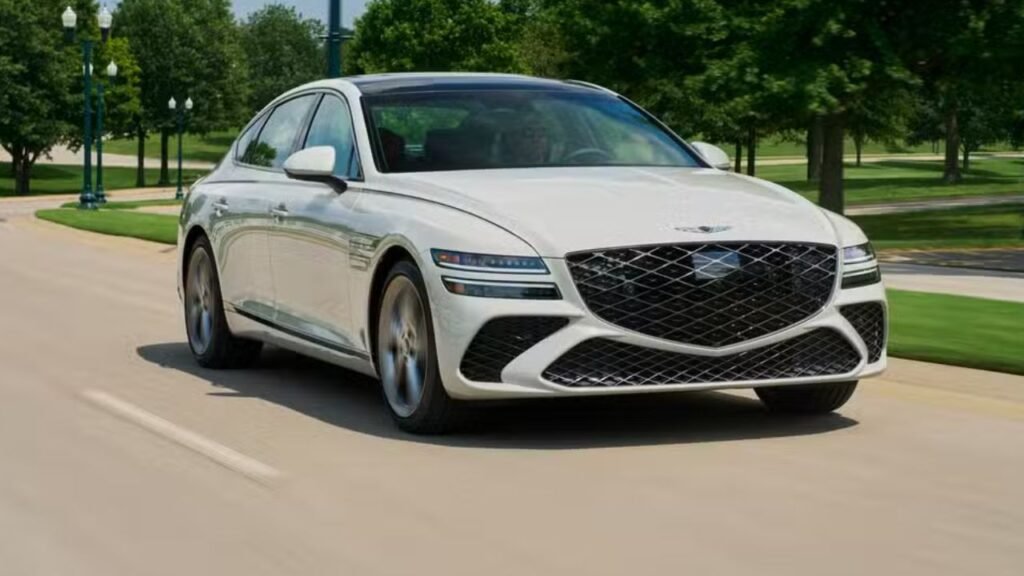
To get the most out of this chassis, the 3.5T V6 is the clear choice. It features a rear-biased AWD system and a limited-slip differential that allows this large sedan to shrink around you on a winding road. It’s a sophisticated alternative for the buyer who is tired of the increasingly complex (and expensive) German options.
Stealth EV Luxury: 2026 Genesis Electrified GV70
If the GV60 is a bit too “sci-fi” for your tastes, the Electrified GV70 is the perfect middle ground. It looks and feels exactly like its gas-powered sibling, which is a stroke of genius for winning over EV skeptics.
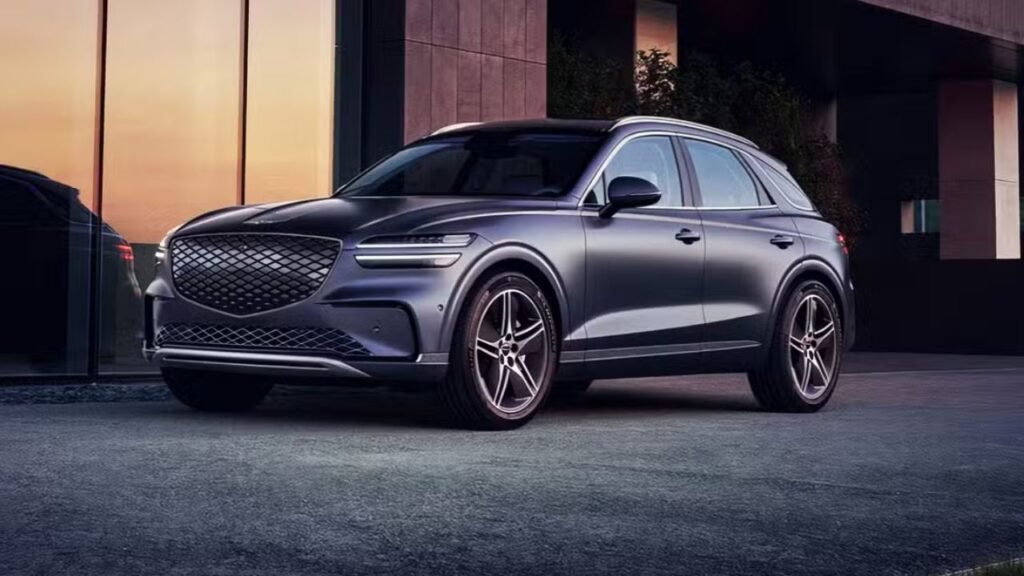
Armed with 429 horsepower and the updated 84-kWh battery, it delivers a 263-mile range. While that number doesn’t lead the segment, its charging speed certainly does. The ability to add 150 miles of range in the time it takes to grab a cup of coffee makes it a viable long-distance traveler. One caveat: pay attention to the brake pedal during your test drive. The handoff between regenerative braking and traditional friction braking can occasionally feel a bit “grabby” compared to the internal combustion version.
The Style Statement: 2026 Genesis GV80 Coupe
Following the trend of “SUV Coupes,” Genesis introduced the GV80 Coupe to trade a bit of utility for a whole lot of presence. But this isn’t just a styling exercise.
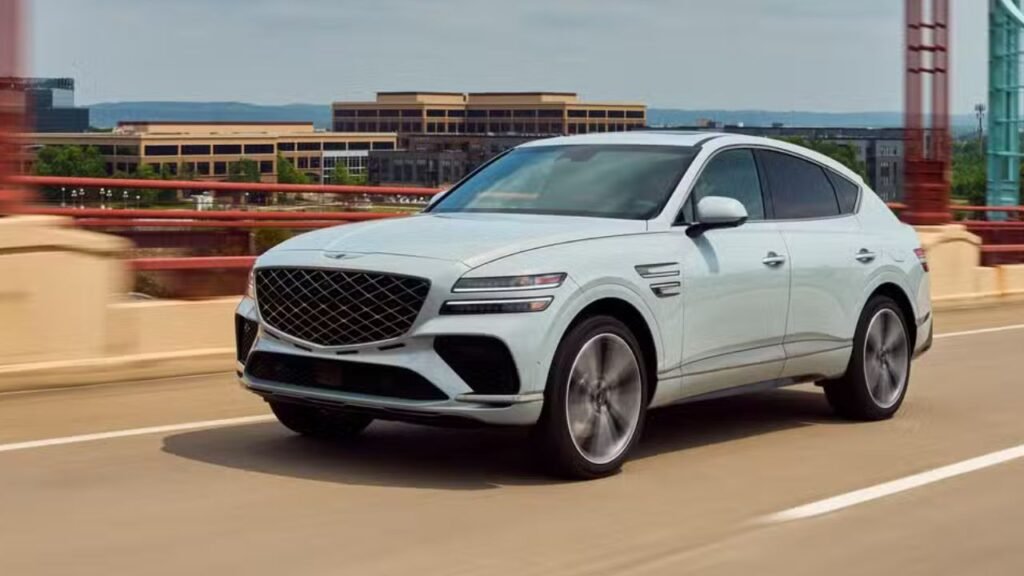
The Coupe utilizes a unique 48V electric supercharger paired with the 3.5L twin-turbo V6. This bumps the output to 410 horsepower and eliminates virtually all turbo lag. It also includes a dedicated “Sport+” mode that sharpens the steering and suspension to levels the standard GV80 can’t reach. It’s an emotional purchase—and at an $81,850 starting price, a premium one—but for the driver who wants to stand out at the valet stand, it’s unrivaled.
The Chauffeur’s Chariot: 2026 Genesis G90
The G90 is Genesis firing on all cylinders. This is a flagship in every sense of the word, designed to go toe-to-toe with the Mercedes-Benz S-Class.
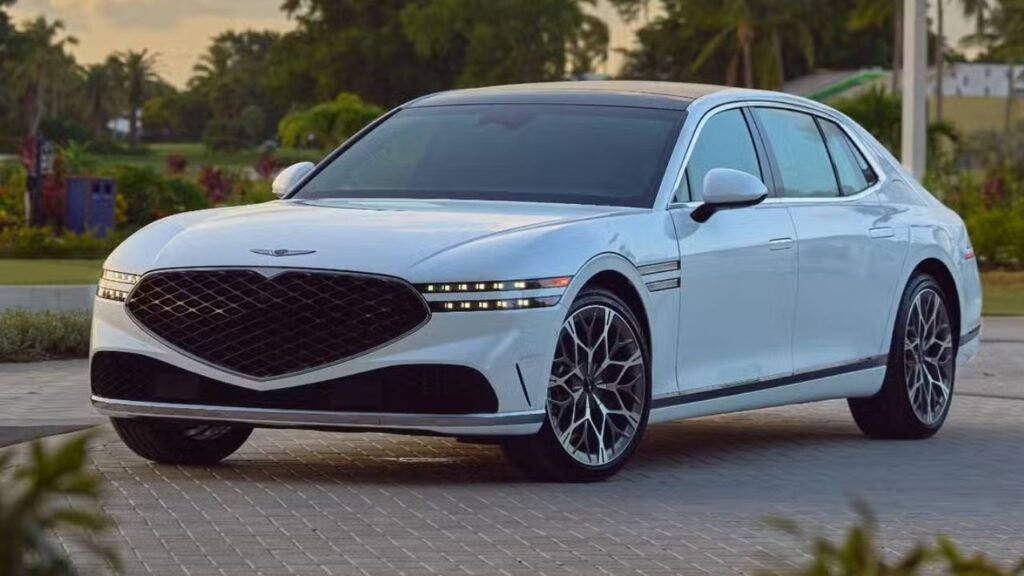
Powered exclusively by a 409-hp mild-hybrid system, the G90 doesn’t just drive; it glides. The advanced air suspension uses cameras to “read” the road ahead, softening the dampers before you even hit a pothole. The rear cabin is the main event, featuring power shades, reclining seats with footrests, and a 23-speaker Bang & Olufsen 3D audio system that creates a literal sanctuary.
The G90 represents the final stage of Genesis’ evolution. It’s no longer about proving they belong in the luxury conversation; it’s about proving they can lead it. The attention to rear-seat ergonomics here is something you typically only find in vehicles costing twice as much.
The Verdict: Navigating the 2026 Genesis Lineup
The 2026 Genesis portfolio proves that the brand has evolved from a disruptive upstart into a bona fide luxury powerhouse. They are no longer just undercutting the competition on price; they are often outclassing them in interior design, standard technology, and ownership experience (thanks to their 10-year/100,000-mile powertrain warranty).
For buyers seeking the ultimate balance of driving dynamics and day-to-day utility, the GV80 remains the sweet spot. However, if you’re ready to embrace the electric future without looking like you’re driving a spaceship, the Electrified GV70 is perhaps the most well-rounded EV on sale today.
Frequently Asked Questions
What are the best models of Genesis vehicles?
The Genesis GV80 SUV and the flagship G90 sedan are widely considered the strongest, most competitive models in the current lineup regarding segment leadership and luxury execution.
Is the GV70 or GV80 better?
It depends on your footprint. The GV70 is sportier and more agile, making it the better pick for urban dwellers. The GV80 offers the “big SUV” feel, superior cargo room, and a more commanding presence on the highway.
Which Genesis model is most reliable?
While the entire brand scores high in dependability, the all-electric GV60 often leads reliability indices due to its E-GMP platform, which features fewer moving parts than traditional internal combustion engines.
Is the Genesis GV70 better than the Lexus RX 350?
yes. The GV70 uses a rear-wheel-drive-biased platform, making it significantly more engaging to drive than the front-wheel-drive-based Lexus RX. It also offers a much more modern, tech-forward interior.