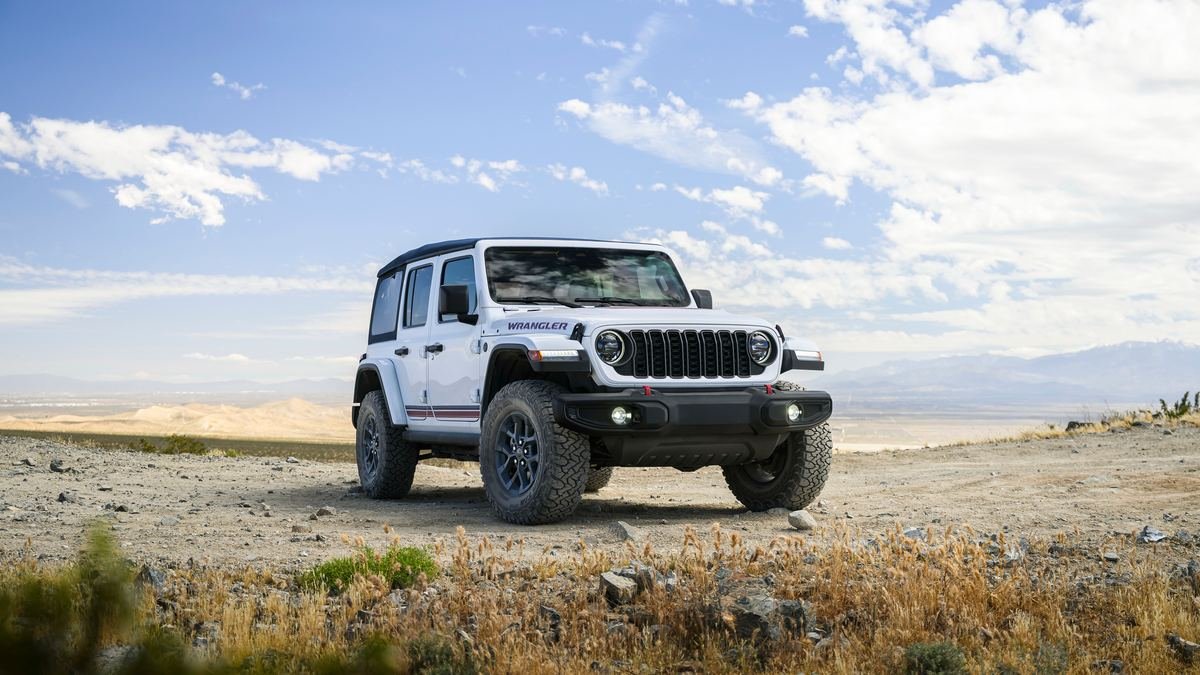


Shift a part-time 4×4 into 4L at 40 mph and you can chew up the transfer case. Leave it in 4H on a dry parking lot and you’ll feel the front tires scrub and hop in the first tight turn. The 4H vs 4L decision comes down to two questions: how much traction you have, and how slowly you need to move. Use 4H on slick surfaces at road speed and 4L only for crawling. Either way, keep a part-time system off dry pavement.
Quick answer: Use 4H on snow, ice, mud, sand or loose gravel when you still want normal road speeds. Use 4L for steep climbs and descents, rocks, deep sand, or pulling a trailer up a slick boat ramp, at walking pace. Shift into 4L stopped, in neutral. In a part-time system, don’t use either on dry pavement.
4H vs 4L: what’s the difference?
Both modes lock the front and rear driveshafts together, so if the rear tires spin, the fronts still pull. The difference is a second set of gears inside the transfer case. In 4H, power passes through at 1:1. In 4L, it runs through a reduction gear first.
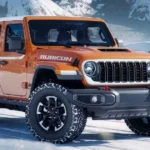
Jeep’s 2026 Wrangler specifications show what that looks like on paper. The NV241 Command-Trac case on the Sport and Sahara has a 2.72:1 low range. The Rock-Trac case on the Rubicon is 4.0:1. A 2.72:1 ratio means the driveshafts turn 2.72 times slower than in 4H at the same engine speed, and they get roughly 2.72 times the torque, minus friction losses.
In practice, if a gear gives you 27 mph in 4H at a given rpm, the same gear and rpm in a Sahara’s 4L gives you about 10 mph. In a Rubicon, it’s under 7 mph. That’s the whole 4H vs 4L trade: speed for torque.
Crawl ratio: the number off-roaders actually compare
Crawl ratio multiplies first gear, the low range and the axle ratio. Using Jeep’s published 2026 figures, a Sport or Sahara with the 8-speed automatic works out to 4.71 x 2.72 x 3.45, or about 44.2:1. A Rubicon automatic with 4.10 axles is 4.71 x 4.0 x 4.10, about 77.2:1. Jeep says a properly equipped Wrangler reaches up to 100:1. At 77:1, the crankshaft turns 77 times for each turn of the wheels.
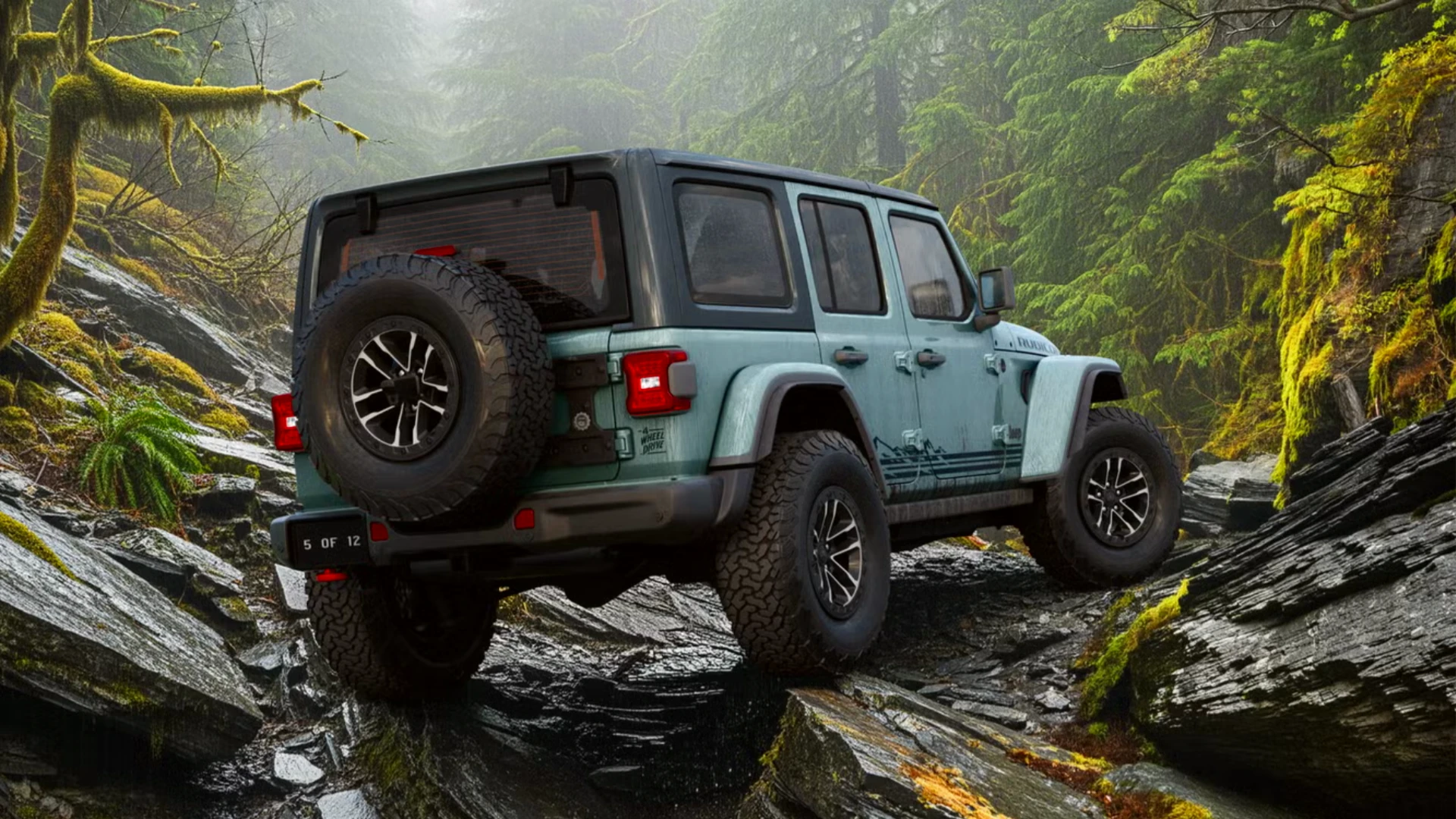
When should you use 4 high vs 4 low?
Pick 4H when the surface is loose or slick and you still need to drive at road speed: a snow-covered highway, a washboard gravel road, wet grass at a campsite, packed sand on a beach drive. It also suits muddy two-tracks where momentum matters.
More Read
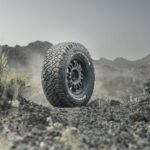
Pick 4L when speed is the enemy. Steep rocky climbs, descents where you want engine braking to hold the truck back, deep sand, recovering a stuck vehicle, and dragging a boat trailer up a ramp coated in algae all belong here. Tires matter as much as gearing on that kind of ground, and our BFGoodrich KO2 vs KO3 comparison covers what a tread change does on rock and mud.
The mistake most drivers make with 4H
They leave it engaged after the snow ends. In a turn, the front wheels travel a longer path than the rears, but a part-time system has no center differential to let the driveshafts turn at different speeds. On dry pavement the tires can’t slip to make up the gap, so the twist builds in the driveline. You’ll feel it as binding, crow-hopping and heavy steering in parking lots. Ford’s F-150 owner’s manual states plainly that “4X4 high mode is not intended for use on dry pavement.”
The exception is a truck with an automatic or full-time mode. GM’s 2026 Silverado spec guide lists an optional active two-speed Autotrac transfer case, part of the Z71 package, that can run in an automatic setting. Jeep’s Selec-Trac and full-time Rock-Trac cases do the same job. If your selector has an Auto or full-time position, that’s the setting for mixed roads with patches of dry pavement.
How fast can you drive in 4 high?
Neither the Toyota nor the Ford owner’s guide we checked sets a top speed for driving in 4H. They limit shifting. Toyota’s 2016 Tacoma quick reference guide says to shift from 2WD into H4 below 62 mph. The real limit is the road surface and your tires.
Madeline Cuccio, writing for SlashGear on Feb. 17, 2025, puts the practical ceiling at 55 mph on paved roads, and above 35 mph only in heavy rain or snow. That’s sensible. If a road is slick enough to need 4H, it’s usually too slick for highway speeds anyway.
Remember what 4WD doesn’t do. It helps you accelerate and keep moving, but your brakes already act on all four wheels in 2WD, so 4H won’t shorten your stopping distance on ice. Drivers who feel planted pulling away from a light are often surprised by how far the truck slides at the next one.
How fast can you go in 4L, and how do you shift into it?
Think walking pace to jogging pace. Cuccio’s guideline is about 10–15 mph, and the gearing math above shows why: in 4L the engine runs out of revs long before the truck feels quick. There’s no reason to be faster on terrain that needs low range.
Shifting is where people break things. Ford’s F-150 manual says to shift into or out of 4L only at 3 mph or slower, with the transmission in neutral, and not to force the lever if it won’t engage. Toyota’s Tacoma guide says to shift into L4 in neutral while stopped, or with the clutch pressed below 2 mph on a manual. If the gears don’t mesh, let the truck roll an inch in neutral and try again.
Which trucks give you the most useful low range?
Low range is not a yes-or-no feature. The ratio and the mode options change what the truck can do, and buyers often pay for the wrong one. Jeep’s 2026 Wrangler release spells out its four systems, and GM and Toyota publish their own.
| Truck | Transfer case | Low range | Auto or full-time mode | Crawl ratio |
|---|---|---|---|---|
| 2026 Jeep Wrangler Sport or Sahara | Command-Trac NV241, part-time | 2.72:1 | No | About 44.2:1 (automatic) |
| 2026 Jeep Wrangler Rubicon | Rock-Trac, part-time or optional full-time | 4.0:1 | Optional | About 77.2:1 (automatic, 4.10 axles) |
| 2026 Jeep Wrangler Moab 392 | Selec-Trac, full-time | 2.72:1 | Yes | About 58.4:1 |
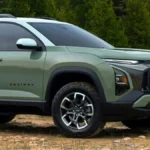
| 2026 Chevy Silverado 1500 Z71 | Active two-speed Autotrac | Not listed in GM’s spec guide | Yes | Not published |
The buying mistake runs both ways. If you need 4WD for icy commutes and the occasional ski trip, a Sahara’s 2.72:1 case covers you, and an auto or full-time mode will matter more to you than a 4.0:1 crawler gear. If you plan to run rock trails, a Rubicon’s 4.0:1 case is the part you can’t add later without real money. The 2026 Wrangler Rockslide and Ford’s Bronco Sasquatch package show how automakers bundle that hardware.
One limitation: these crawl ratios are our math from each automaker’s published gear ratios, not figures the companies print for every configuration. Check the spec sheet for the exact axle ratio on the truck you’re buying.
FAQ about 4H and 4L
Is it OK to drive in 4H on the highway?
Yes, on a highway covered in snow or ice, at a speed that suits the conditions. Don’t do it on dry pavement in a part-time system, because the locked front and rear driveshafts bind in turns. Ford’s F-150 manual says 4H isn’t meant for dry pavement. Auto or full-time 4WD modes are fine on mixed surfaces.
Can you shift from 4H to 4L while driving?
Not in most trucks. Ford tells F-150 owners to shift into 4L at 3 mph or slower with the transmission in neutral. Toyota’s Tacoma guide says to shift while stopped in neutral, or with the clutch pressed below 2 mph on a manual. Forcing the lever while rolling can grind the transfer case gears.
Should you tow in 4 low?
Only for short, slow pulls: a boat up a slick ramp, or a camper out of a wet field. 4L multiplies torque by the transfer case ratio, 2.72:1 in a Wrangler’s Command-Trac case, which eases the load on the transmission. Once you’re rolling on firm ground, shift back to 4H or 2WD. Never tow on the road in 4L.
The one number to remember in the 4H vs 4L decision is the low-range ratio on your spec sheet: 2.72:1 in a Wrangler Sahara, 4.0:1 in a Rubicon. Divide your 4H speed by it at the same rpm, and you’ll see why 4L is for crawling and nothing else.