The wait is almost over for families looking to trade their gas cards for charging cables without sacrificing the “L-Finesse” lifestyle. On Wednesday, May 6, 2026, at 9:30 p.m. Eastern Time, Lexus will officially pull back the curtain on its highly anticipated Lexus three-row electric SUV.
While the automaker has been playing it close to the vest with shadowy teaser images and cryptic social media posts, the industry’s worst-kept secret is that this flagship hauler will likely wear the “TZ” badge. Positioned as the silent, zero-emission counterpart to the current Lexus TX, the TZ is more than just a new model; it’s the centerpiece of the brand’s ambitious pivot toward a fully electric lineup by 2035.
The Lexus TZ: A Premium Sibling to the Toyota Highlander EV
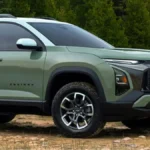
In the world of modern automotive engineering, sharing is more than just a virtue—it’s a financial necessity. To bring this Lexus three-row electric SUV to market with the speed and scale required to compete, Lexus is leaning on the proven “Global EV” architecture of its parent company. The TZ is the luxurious culmination of a trio of vehicles: the recently launched 2027 Toyota Highlander EV and the rugged, high-performance Subaru Getaway.
However, if you think this is just a Toyota with a fancier clock, you haven’t been paying attention to the Lexus playbook. Much like the smaller RZ differentiated itself from the bZ4X, the TZ is expected to undergo a radical “Lexus-fication” process. This involves more than just swapping badges. Engineers have reportedly spent thousands of hours at the Toyota Technical Center Shimoyama, refining the “Lexus Driving Signature”—a unique blend of linear response, steering precision, and absolute cabin serenity.
“By leveraging the proven EV architecture underpinning the upcoming Toyota Highlander EV and the Subaru Getaway, Lexus can focus its R&D entirely on what it does best: refining the cabin experience, eliminating road noise, and delivering a flagship-level luxury ride. It’s a strategic masterstroke that ensures reliability while doubling down on premium identity.
Power and Poise: Anticipating 420 Horsepower
When it comes to the spec sheet, automotive enthusiasts aren’t just looking for range; they’re looking for the effortless torque that defines the luxury EV experience. Based on recent trademark filings for the “TZ 450e” and “TZ 550e,” we can expect two distinct performance tiers.
While the Toyota Highlander EV focuses on efficiency with a respectable 338-horsepower dual-motor setup, Lexus is expected to follow the lead of the Subaru Getaway. That model has already set the bar high with a standard 420-horsepower configuration that propels the three-row beast from 0 to 60 mph in a blistering 5.0 second. Subaru Getaway 420-hp dual-motor performance metrics.
We anticipate the flagship Lexus TZ 550e will utilize this high-output dual-motor “Direct4” all-wheel-drive system. This isn’t just about straight-line speed; the Direct4 system continuously analyzes wheel speed, steering angle, and G-forces to shift power between the front and rear axles in milliseconds. Whether you’re carving through a rainy mountain pass or merging onto a crowded interstate, the goal is a feeling of total composure that gas-powered SUVs simply can’t match.
More Read

Battery Tech and the 300-Mile Club
Range anxiety is the ghost that haunts every EV conversation, but Lexus seems prepared to bust it. The TZ is expected to skip the smaller “Standard Range” batteries offered on its corporate cousins and go straight for the “Long Range” 95.8-kWh lithium-ion pack.
In the Toyota Highlander EV, this same battery is rated for a manufacturer-estimated 320 miles of range. Because the Lexus will likely carry more weight in the form of sound-deadening materials and luxury amenities, we expect a slightly more conservative, yet still competitive, EPA estimate of just over 300 miles. Lexus internal range targets for the TZ platform.
Charging will be equally stress-free. Following the industry trend, the TZ will come standard with a North American Charging System (NACS) port. This means Lexus owners will have native access to over 25,000 Tesla Superchargers across North America, eliminating the need for clunky adapters. For those charging at home, the vehicle’s onboard charger should support high-speed Level 2 AC charging, making overnight “refills” a breeze.
The “Tazuna” Cockpit: Where Hospitality Meets High-Tech
Step inside, and the TZ will showcase the latest evolution of Lexus’s Omotenashi (hospitality) philosophy. The “Tazuna” cockpit—named after the Japanese word for the reins of a horse—is designed to put all critical controls within easy reach of the driver, minimizing distraction.
Expect a massive 14.0-inch high-definition touchscreen to dominate the dashboard, likely running the latest version of the Lexus Interface. This system has been praised for its intuitive voice commands (“Hey Lexus!”) and seamless wireless integration with Apple CarPlay and Android Auto.

For the passengers in the back, the Lexus three-row electric SUV promises true “adult-sized” comfort. While many SUVs in this class treat the third row as an afterthought for toddlers, the TZ’s dedicated EV platform allows for a flat floor and a longer wheelbase, maximizing legroom across all three rows.
- Seating Configurations: Buyers will likely choose between a seven-passenger bench or second-row captain’s chairs for a more executive six-passenger feel.
- Premium Materials: Expect sustainably sourced woods, Ultrasuede accents, and the “Radiant Heater” tech found in the RZ, which warms passengers’ legs without the dry air of a traditional heater.
- Cargo Space: Even with the third row in use, the TZ is expected to offer roughly 16 cubic feet of storage, expanding to over 45 cubic feet with the seats folded flat.
The Competitive Landscape: Facing Off with the Titans
The luxury three-row EV segment is no longer a one-horse race. When the TZ arrives in showrooms (likely in late 2026 as a 2027 model), it will face off against some formidable incumbents.
- Kia EV9: The current “value” leader. It offers great tech and range, but some buyers still crave the prestige and dealership experience associated with a Lexus badge.
- Rivian R1S: A darling of the adventure-set. It has more off-road capability but lacks the polished, quiet refinement of a Lexus.
- Tesla Model X: The veteran. While its Supercharger network advantage is being neutralized by the TZ’s NACS port, its “Falcon Wing” doors and tech remain polarizing.
- Volvo EX90: Perhaps the TZ’s closest rival. Both brands prioritize safety and Scandinavian/Japanese minimalism, making this a battle of philosophies.
Lexus’s secret weapon in this fight? Reliability. The brand has consistently topped J.D. Power dependability charts for decades, and for many families, the peace of mind that comes with a Lexus is worth the premium price tag.
Manufacturing Excellence: “Made in the USA”
In a move that highlights the importance of the North American market, the Lexus three-row electric SUV (and its Toyota sibling) will be assembled at Toyota Motor Manufacturing Kentucky (TMMK) in Georgetown. This massive facility has been the heart of Toyota’s American manufacturing for decades, and its conversion for EV production represents a multi-billion dollar investment in the local workforce.
Furthermore, the battery modules themselves are expected to be sourced from a new plant in North Carolina. This localized supply chain isn’t just good for the environment; it’s a strategic move to potentially qualify the vehicle for federal EV tax credits under the Inflation Reduction Act—though the TZ’s luxury price point may push it past the eligibility cap for some buyers.
“The decision to build the TZ in Kentucky is a clear signal that Lexus isn’t just dipping its toe into the EV waters; they are diving in headfirst. Localizing production is the only way to ensure they can meet the massive demand we expect for a premium three-row hauler in the U.S. market.
Conclusion: A Turning Point for the “L” Badge
The reveal of the Lexus three-row electric SUV on May 6 marks a watershed moment for the automotive industry. For years, Lexus has been criticized for being “late” to the EV party, choosing instead to focus on its world-class hybrids. But with the TZ, the brand is making an entrance that is impossible to ignore.
By combining a projected 420-horsepower punch with the legendary craftsmanship and hospitality that enthusiasts expect, the TZ isn’t just filling a hole in the lineup—it’s redefining what a family road trip can look like in the electric age. It promises the space of a minivan, the soul of a sport sedan, and the silence of a library.
Whether you’re an early adopter who’s been waiting for a reliable luxury EV or a long-time Lexus loyalist ready to make the switch, the May 6 reveal is a must-watch event. As the silhouette finally steps out of the shadows, the “TZ” looks poised to prove that sometimes, the best things really do come to those who wait.