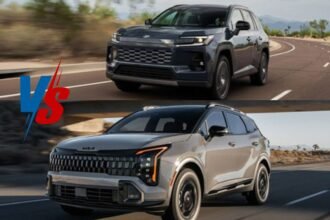
About 77% of the new light-duty vehicles sold in the U.S. in the third quarter of 2026 had no hybrid system and no plug, according to the U.S. Energy Information Administration. Those are ICE vehicles, short for internal combustion engine, and they’re still the default choice for most American buyers. The term shows up in sales reports, reviews and window-sticker debates, and our position is simple: for the rest of this decade, ICE vehicles are the market, and the smart move is picking the right kind of engine rather than waiting for gas cars to disappear.
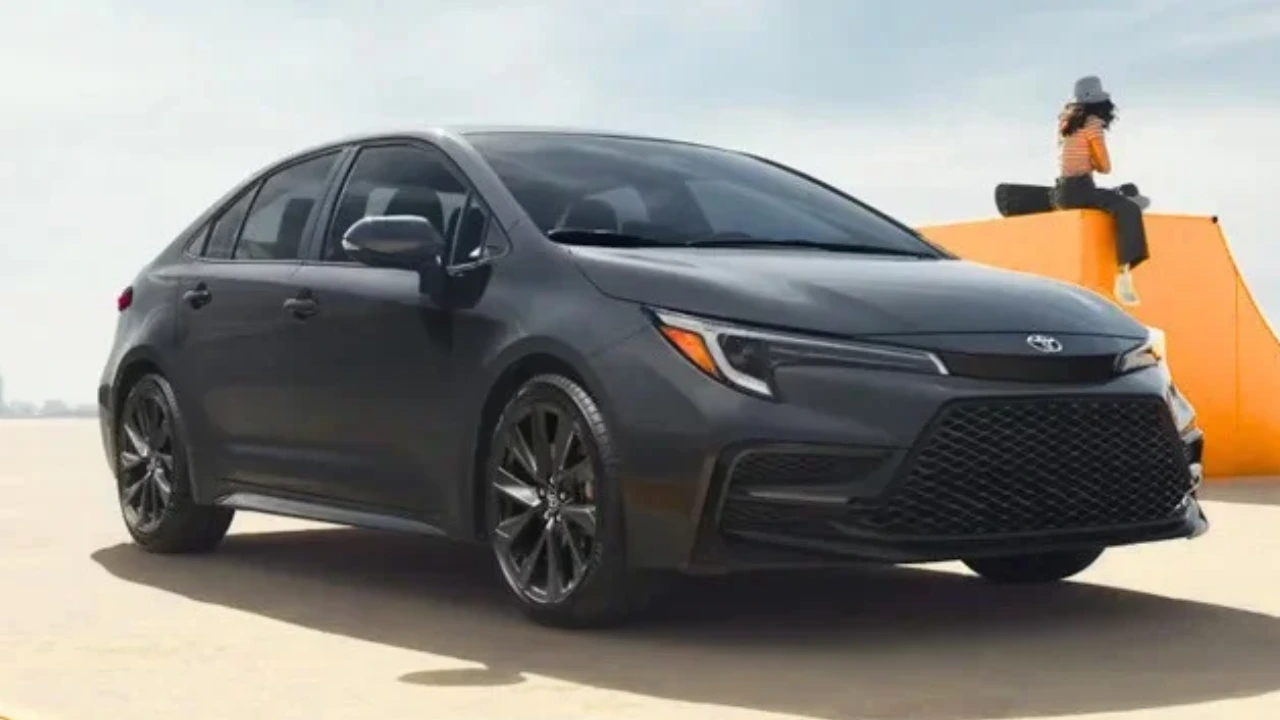
Quick answer: ICE stands for internal combustion engine. An ICE vehicle burns gasoline or diesel inside its engine’s cylinders to turn the wheels. Conventional hybrids such as the Toyota Corolla Hybrid still count as ICE vehicles because the engine does most of the work. Battery electric vehicles are the only mainstream cars with no ICE at all.
What does ICE mean on a car?
The U.S. Department of Energy’s engine primer describes it plainly: fuel and air burn inside a cylinder, the expanding gas pushes a piston, and the piston turns a crankshaft that drives the wheels through the transmission. Most engines do this in four strokes. Intake, compression, combustion and exhaust.
There are two production types. A gasoline engine mixes fuel with air first and fires it with a spark plug. A diesel squeezes plain air until it’s hot enough that injected fuel ignites on its own, which is why diesels run higher compression and make more low-rpm torque for towing. The DOE says more than 250 million highway vehicles in the U.S. rely on internal combustion engines.

Are hybrids ICE cars?
Yes, and this is the point most explainers skip. The industry splits vehicles by how much of the driving the engine does, and the label “ICE” covers more than plain gas cars. Cox Automotive’s monthly EV reports even use the term “ICE+” to group gas and hybrid models together against EVs.
Conventional hybrid (HEV)
A small battery and motor help the engine at low speed and recapture braking energy. You never plug it in. The engine is still the main power source, so it’s an ICE car with better city mpg. Hybrids reached 16% of new U.S. light-duty sales in the third quarter of 2026, per the EIA, up from the year before.
Plug-in hybrid (PHEV) and battery EV
A plug-in hybrid carries a bigger battery for a short electric-only range, then falls back on its gas engine. It sits in between. A battery EV has no engine at all. The EIA put plug-in hybrids at just 0.7% of sales and battery EVs at 6% in that same quarter.
More Read

Why do ICE vehicles still outsell EVs?
Price is the first reason. Kelley Blue Book data published November 17, 2026 put the average new EV transaction price at $56,221 in October, against $50,915 for gas and hybrid models. That’s a $5,306 gap, and it exists even though dealers were discounting EVs by 11.3% of the sale price, nearly double the 6.8% industry average.
The second reason is that the federal help ended. The federal New Clean Vehicle Credit expired on September 30, 2025, and the EIA’s October 19, 2026 analysis shows what followed: battery EV share fell from 10% in the third quarter of 2025 to 6% a year later. In the luxury segment the drop was steeper, from 31% to 12%.
The third is the work people buy trucks and big SUVs to do. Full-size pickups averaged $67,912 in October 2026 per Kelley Blue Book, and many of those buyers tow, where a gas tank refills in minutes and range doesn’t collapse behind a trailer. GM’s $830 million investment in its Gen 6 V8 tells you how long automakers expect that demand to last.
ICE cars vs hybrids: what the fuel savings look like
Here’s a real pairing from the same class. The Chevrolet Tahoe with its 5.3-liter V8 is a straight ICE SUV rated at 17 mpg combined by Kelley Blue Book. The Toyota Sequoia uses a twin-turbo V6 with a hybrid motor, and Toyota quotes up to 22 mpg combined. Both are ICE vehicles. One just has help.
Drive 12,000 miles a year and the Tahoe burns about 706 gallons while the Sequoia uses about 545. That’s 161 gallons saved every year, which is real money at any gas price, though you pay for it up front: the 2025 Sequoia SR5 starts at $62,425. The math gets better the more city miles you do, because that’s where the electric motor carries the load. If you’re shopping smaller, our 2026 Corolla review runs the same hybrid-versus-gas numbers on a $1,850 price gap.
The trap at purchase is assuming a small turbo engine is automatically the efficient pick. Ram’s Hurricane turbo six outran the Hemi V8 in testing, but turbo engines spend more time in boost when towing, and that’s when their mpg drops furthest. Check the EPA combined number and then think honestly about how you’ll drive.
Are ICE vehicles being banned in the U.S.?
No, and federal policy moved the other way in 2025 and 2026. On June 12, 2025, President Trump signed H.J.Res. 88, which revoked the federal waiver for California’s Advanced Clean Cars II rule, the regulation behind the state’s 2035 target of 100% zero-emission new-car sales. California and 10 other states sued, and that case is still pending. Owning, driving and selling used gas cars was never part of that rule.
Then the EPA finalized its rescission of vehicle greenhouse gas standards, effective April 20, 2026. In September 2026, NHTSA cut the fleet fuel economy target for model year 2031 to about 34.9 mpg, down from 49.3 mpg under the 2024 rules, and said the new levels are achievable with gas and diesel engines alone. Courts, a future administration or Congress could change any of this, so treat it as today’s rulebook.
ICE vehicles and EVs: questions people ask
What does ICE stand for in cars?
ICE stands for internal combustion engine. It’s an engine that burns fuel, usually gasoline or diesel, inside its own cylinders, and the pressure from that combustion pushes pistons that turn the crankshaft and drive the wheels. When people say ICE vehicles or ICE cars, they mean any car or truck powered by that kind of engine rather than by a battery alone.
Is a hybrid an ICE vehicle?
Yes. A conventional hybrid such as the Toyota Corolla Hybrid or Toyota Sequoia still uses a gas engine as its main power source, with a small battery and motor helping at low speeds. You never plug it in. Cox Automotive groups gas and hybrid models together as ICE+ in its sales reports. A plug-in hybrid also has an ICE, while a battery EV has none.
Will ICE cars be banned in the US?
There’s no federal ban. Congress revoked the waiver for California’s 2035 zero-emission sales rule in June 2025, the EPA repealed vehicle greenhouse gas standards in 2026, and NHTSA lowered fuel economy targets in September 2026. California is challenging the waiver decision in court. None of these rules ever stopped you from owning, driving or selling a used gas car.
Some automakers are still pausing big electric projects, as GM did with its next-generation Hummer EV, and that keeps gas engines in showrooms longer. For buyers, the decision that matters is plain gas versus hybrid, because ICE vehicles with a hybrid motor already save a Sequoia-sized SUV 161 gallons a year over a V8 Tahoe.