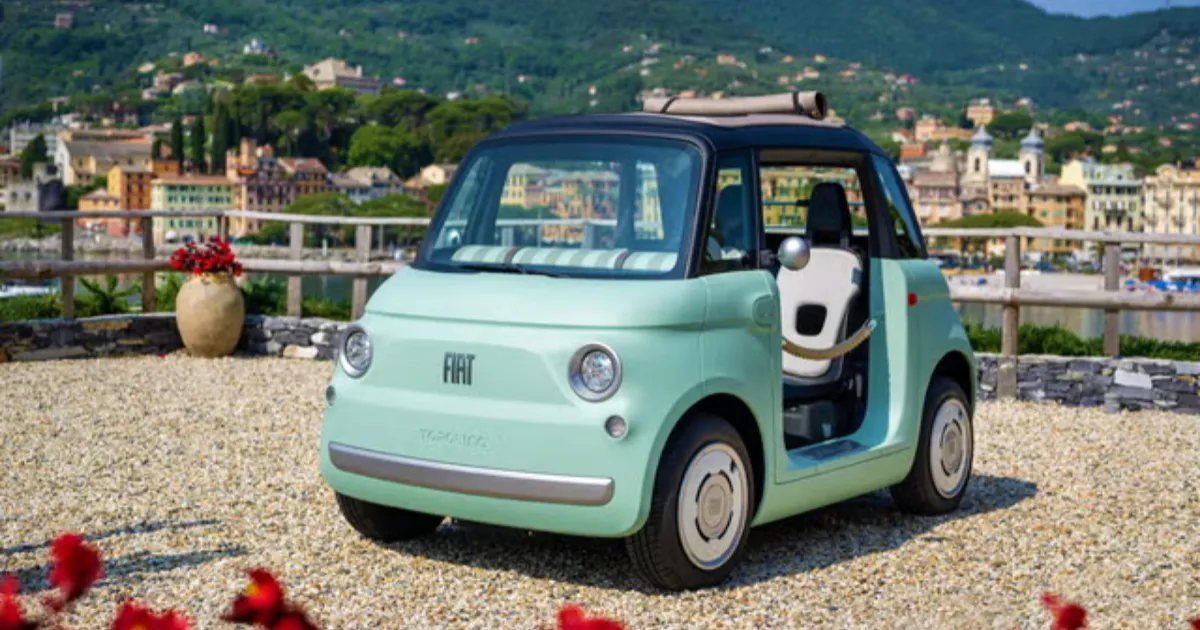


- The Fiat Topolino EV represents a revolutionary approach to urban mobility, measuring under 100 inches with an 8-horsepower motor and 47-mile range specifically designed for city driving rather than highway travel.
- This ultra-compact electric vehicle will arrive in American markets during 2026 with pricing likely remaining competitive with its 9,890-euro European sticker price, though final US pricing depends on manufacturing costs and regulatory requirements.
- The Topolino EV’s quadricycle classification, proven platform heritage from the Citroën Ami, and strong consumer enthusiasm at automotive events suggest significant potential for capturing the emerging micromobility market segment.
Fiat has officially announced its most ambitious market expansion in years, bringing the innovative Topolino EV to American consumers. This groundbreaking ultra-compact electric vehicle represents a significant shift in how manufacturers approach urban transportation solutions. The miniature powerhouse is set to challenge conventional notions of what constitutes a practical city car in the United States.
What Exactly Is the Tiny Topolino EV?
The Topolino EV stands as one of the automotive industry’s most distinctive offerings, measuring just under 100 inches in length. This engineering marvel is approximately 43 inches shorter than Fiat’s existing 500e model, making it genuinely revolutionary in terms of compact vehicle design. The nameplate honors the original Fiat 500, affectionately known as “Topolino” during its production run from 1936 to 1955.
Technically classified as a quadricycle in European markets rather than a conventional automobile, the Topolino EV challenges traditional vehicle categorization. This classification reflects its unique positioning within the emerging micromobility segment. The distinction becomes particularly important when understanding regulatory frameworks and market positioning strategies.
Core Specifications and Performance Details
The Topolino EV operates with deliberately simplified mechanical architecture, featuring a single electric motor generating 8 horsepower. Its compact 5.5-kilowatt-hour battery pack delivers an estimated 47 miles of range under European testing conditions. These specifications align with the vehicle’s purpose as an urban commuting solution rather than a long-distance touring instrument.
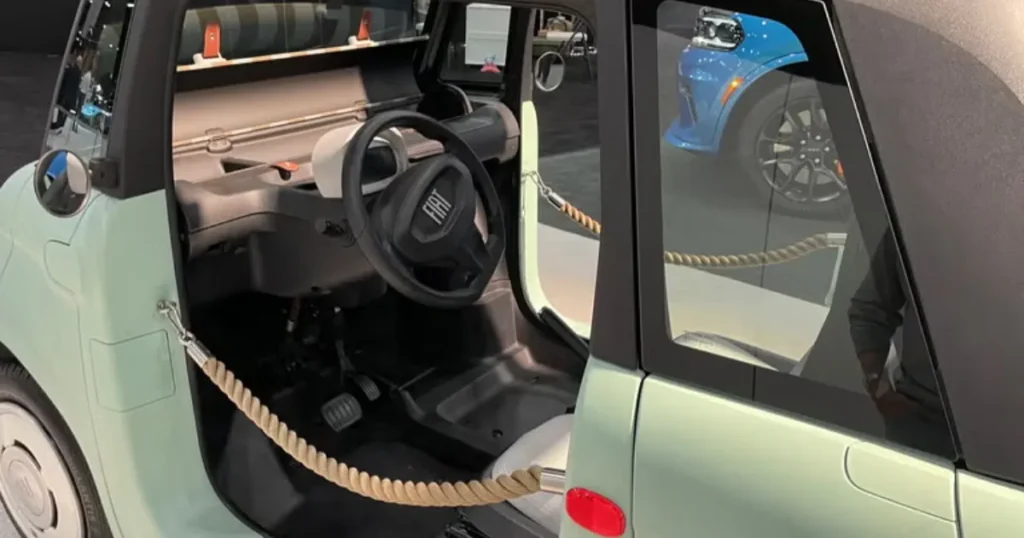
Maximum speed reaches just under 28 miles per hour, positioning the Topolino EV as exclusively intended for city driving scenarios. This limitation eliminates highway capability, making it impractical for interstate travel or suburban commutes. The focused engineering approach demonstrates intentional design philosophy centered on urban environments.
The Path to American Markets
Fiat CEO Olivier Francois unveiled the Topolino EV expansion during Miami’s prestigious Art Week celebration, signaling the company’s commitment to innovative market penetration. The announcement included showcasing a specially customized version featuring vibrant artistic elements created by renowned Brazilian painter Romero Britto. This creative marketing approach generated substantial consumer enthusiasm across multiple demographic segments.
Recent appearances at prominent American automotive events, including the Los Angeles Auto Show and the Woodward Dream Cruise, positioned the Topolino EV as an emerging cultural phenomenon. Consumer reactions at these exhibitions demonstrated genuine excitement about the vehicle’s unconventional approach to personal transportation. Fiat management indicated that this positive reception would significantly influence market introduction strategies.

Understanding the Topolino EV’s European Origins
The Topolino EV represents a rebadged iteration of the Citroën Ami, a European vehicle that achieved substantial viral recognition several years ago. The original Citroën Ami gained widespread internet attention following a memorable incident at Monaco’s Grand Hotel hairpin turn, typically reserved for Formula 1 racing and supercar demonstrations. This previous market validation provided confidence in the platform’s consumer appeal.
Both vehicles share identical powertrain architecture, battery specifications, and overall mechanical components. The strategic rebadging leverages Fiat’s stronger brand recognition within North American markets while maintaining proven engineering fundamentals. This approach represents practical efficiency in vehicle platform utilization across international markets.
Pricing Expectations and Market Positioning
In Italian markets, the Topolino EV carries a base price of approximately 9,890 euros, equivalent to roughly 11,500 dollars at current exchange rates. American consumers eagerly anticipate whether Fiat can maintain similarly affordable pricing for the US introduction. Market analysts remain cautiously optimistic about competitive positioning within emerging urban mobility segments.
The pricing strategy will ultimately determine whether the Topolino EV captures substantial market share or remains a niche offering for specific consumer demographics. Manufacturing costs, tariffs, and dealer network infrastructure will significantly influence final American pricing structures. Early price point decisions will shape market penetration rates and long-term sales projections.
Why the Tiny Topolino EV Matters for Urban Mobility
This ultra-compact electric vehicle addresses growing consumer demand for sustainable urban transportation solutions. Traditional compact cars increasingly appear oversized for congested metropolitan driving environments. The Topolino EV’s minimal footprint maximizes parking efficiency and minimizes environmental impact through reduced energy consumption.
City dwellers face persistent challenges with traffic congestion, limited parking availability, and environmental pollution concerns. The Topolino EV directly addresses these interconnected problems through its engineering approach. Its diminutive dimensions enable parking in spaces unsuitable for conventional vehicles, reducing overall urban infrastructure strain.
Launch Timeline and Consumer Expectations
Fiat management has indicated that comprehensive details regarding American availability will emerge throughout 2026. The extended timeline allows for regulatory compliance verification, dealer network establishment, and market preparation activities. Interested consumers can currently register for updates through official Fiat channels to receive information as announcements develop.
The deliberate pacing suggests thorough consideration of how American consumers will receive such an unconventional vehicle concept. Market research and consumer feedback collection will likely influence pricing structures and marketing messaging strategies. Fiat appears committed to a methodical introduction rather than hasty market entry.
The Quadricycle Classification Explained
In European regulatory frameworks, quadricycles occupy a distinct category separate from conventional automobiles, requiring less stringent safety standards and certification requirements. This classification enables manufacturers to bring innovative designs to market more rapidly than traditional vehicles would permit. The distinction becomes particularly relevant when examining how American regulatory agencies might approach the Topolino EV.
Understanding this technical distinction helps clarify why the Topolino EV functions differently than standard passenger vehicles. The European quadricycle designation reflects purposeful engineering focused on specific use cases rather than universal automotive application. American regulators may create parallel categories or require modifications to meet domestic safety standards.
The introduction of the Topolino EV to American markets signals a transformative moment in automotive industry evolution. Manufacturers increasingly recognize that one-size-fits-all vehicle solutions fail to address diverse consumer transportation needs. Fiat’s willingness to challenge conventional wisdom demonstrates courage in market differentiation strategies.
Consumer acceptance remains the critical unknown factor influencing long-term success projections. American automotive culture traditionally prioritizes larger vehicles with extended range capabilities, potentially limiting Topolino EV adoption. However, shifting demographic priorities and environmental consciousness may create unexpected demand among urban consumers seeking practical alternatives to traditional personal vehicles.
The next twelve months will prove decisive in determining whether this innovative European concept resonates with American buyers or remains a curiosity within specialized market segments.